It looks like the Internal Combustion Engine (ICE) is heading for the history books even sooner than previously thought. After this month’s unexpected statement by the government that they intend to bring forward the banning of petrol, diesel and hybrid car sales to 2035, news has emerged that the date might actually be as early as 2032.
“The ban would happen by 2035 – or even 2032, subject to consultation” Grant Shapps, Secretary of State for Transport told the BBC last week.
This is good news for the environment and the man in the street, who will benefit from all the advantages of electric car proliferation, however carmakers were understandably shocked by the news that they had 15 years to phase out production of fossil fuel models, rather than the 20 years that was previously scheduled, and they will be doubly dismayed to learn they might need to do it in as few as 12 years.
Among the main concerns for carmakers are incentives such as grants for electric cars as well as building national infrastructure capable of charging millions of vehicles. During the third quarter of 2019, the Department for Transport recorded 22,596 registrations of ultra-low emission vehicles, which includes electric cars – 39% more than the same period in the previous year. However, that still represented only 3.1% of new car registrations during the period. Shapps and Andrea Leadsom, the business secretary, will meet the SMMT on Thursday, with the lobby group hoping to persuade the government that the industry will need more help to achieve the targets.
This is a huge development in the EV marketplace and in the history of transportation and we’re looking forward to seeing how this plays out over the next few years, and we hope that the change comes sooner rather than later.
Car manufacturer Rivian have created a video about how the people of Puerto Rico have embraced the use of solar power, and their desire to re-purpose used car batteries for grid storage.
By using solar power stored in used car batteries, the people of Cash Pueblo want to confront global warming, become energy independent and leave the issues and costs of power generation and distribution in the past.
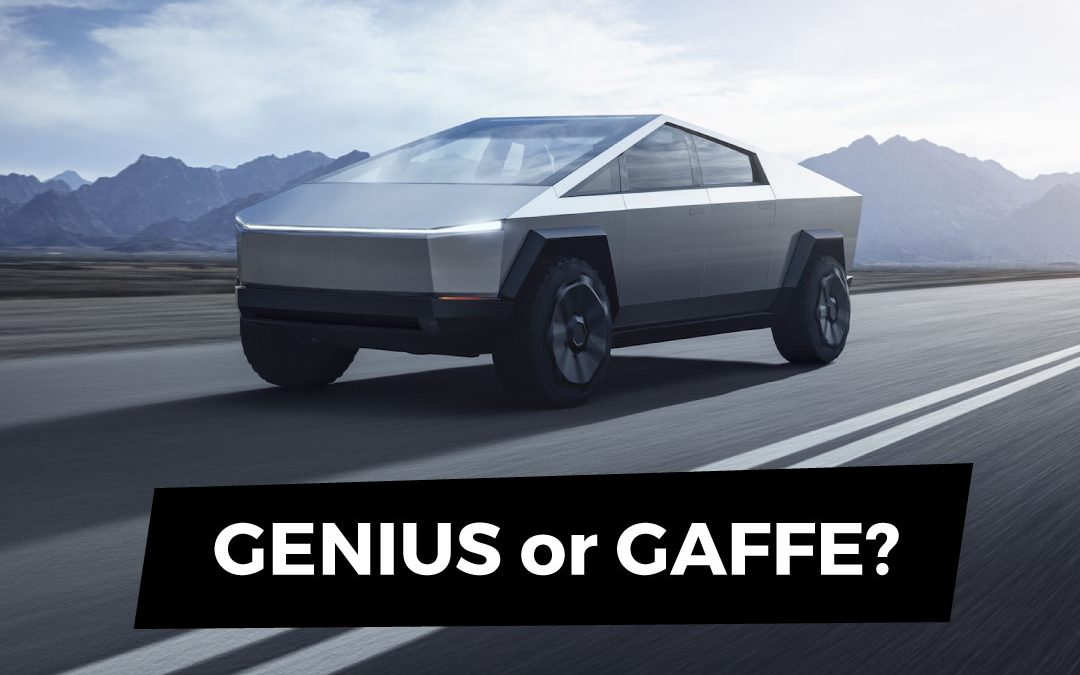
You’d have to be on Mars not to have heard something about the notorious launch of Tesla’s latest vehicle, but now the laughter and wonderment has died down, can we divine whether the Cybertruck is a crazy blunder or a stroke of genius from the tech giant?
You’d be forgiven for thinking the Cybertruck is a child’s drawings come to life, but there’s more to the ‘out-there’ design and eye-poppingly alternative looks than meets the eye.
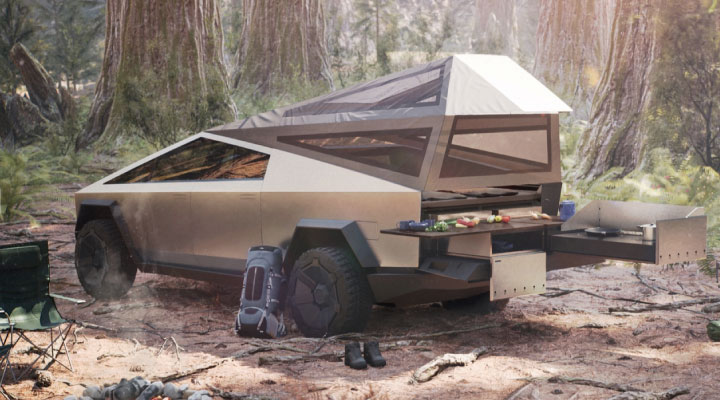
Elon Musk is the ultimate pragmatist, his grounding in science and physics means that everything he makes tries to simplify, improve and re-define the familiar ‘from first principles’, and the Cybertruck is no exception. The outer shell is made from cold-rolled stainless steel – partly because of it’s superior corrosion resistance, but mainly because it’s strength-to-weight ratio is extremely high, and most importantly it’s cheap and efficient to produce – a theme that runs through everything Elon makes. The ‘exoskeleton’ also doubles as part of the chassis, so the overall strength is increased and the production process is simplified, again reducing costs. But what about the striking and ‘futuristic’ looks, what the hell was he thinking, right? Believe it or not the angular shape and hard lines are not from a fevered dream or simply intended to differentiate the product visually, although they certainly do that, in actual fact the design was informed by the function and yes, you guessed it, cost. The design features almost no curves, meaning that the body panels are much easier to produce, and the glass can be made from flat sheets, which are far cheaper to produce than windows with complex curves and seals. And speaking of the (ahem) unbreakable glass, this is supposedly being made from transparent metal, meaning it will be far stronger than normal silicon based glass sheets, although currently their website says it uses ‘polymer-layered composite’, which is more like traditional windscreens. So after all the dust from the launch has settled, and whether you love or hate the controversial looks, one thing is for certain; the Cybertruck is an example of Elon Musk attempting to disrupt yet another well established market sector, and make us all re-think what know about how things should work. We love it.
We hear about new battery technology all the time, so much so it seems like there’s some kind of breakthrough almost once a week, and while something about this technology definitely rings true, could there be a catch?
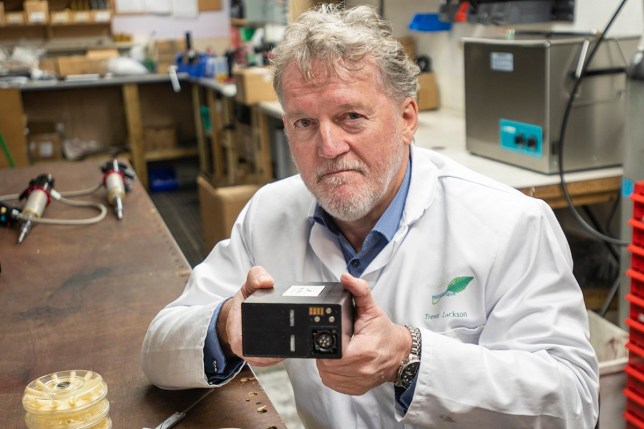
British engineer Trevor Jackson created the battery and has now signed a multi-million pound deal with Austin Electric, an engineering firm based in Essex, to start mass producing them.
According to Austin’s chief executive, Danny Corcoran, the new technology is a ‘game-changer’.
‘It can help trigger the next industrial revolution…The advantages over traditional electric vehicle batteries are enormous.’
Battery inventor Trevor Jackson
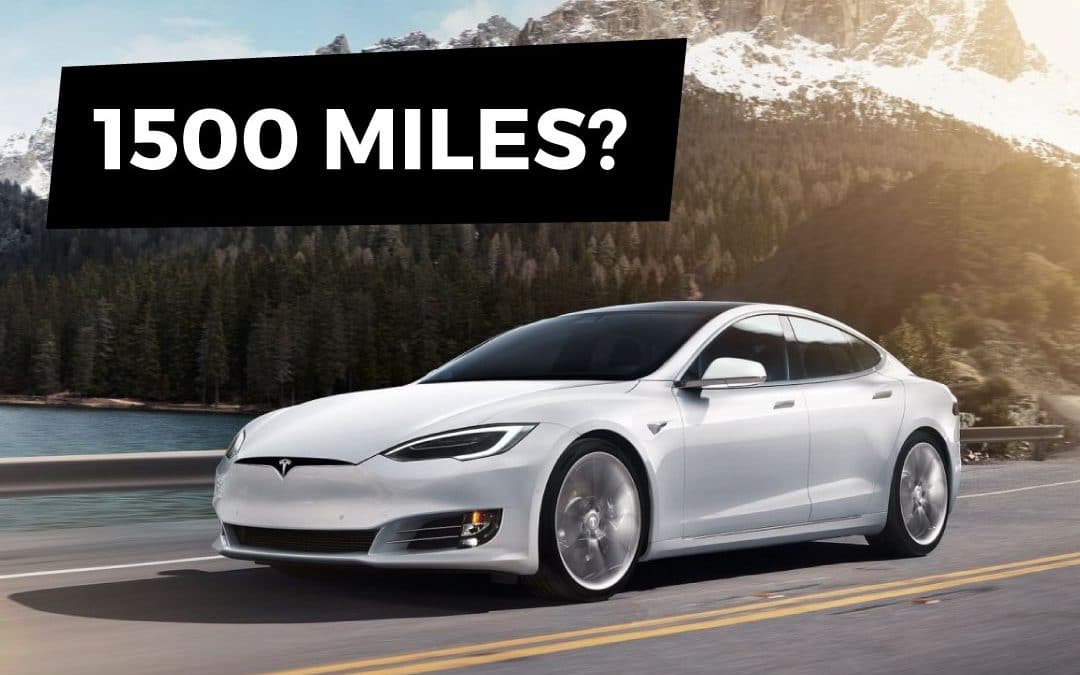
Technically, it should be described as a fuel cell, not a battery. Either way, it is so light and powerful that it has been touted to potentially revolutionise low-carbon transport, because it supplies so much energy. The power to travel up to 1,500 miles on a single charge would make it four times more effective than the most expensive model currently on the road.
He says it has taken so long do develop the battery because he faced obstruction from the established motor industry. ‘It has been a tough battle but I’m finally making progress. From every logical standpoint, this is the way to go,’
However promising this new take on the aluminium battery looks, there is, unfortunately, a catch. The battery destroys itself and needs to be replaced after every use. This is because as the electrons are released from the aluminium it breaks down, and so after every full charge cycle the battery itself would need to be removed from the vehicle and replaced. This seriously hinders the freedom of the driver, and while it certainly does have a higher energy density than current chemical batteries, it pretty much renders the technology unsuitable for transport applications.
We’re sure it will have its applications, but as far as using them for personal transport we think it’s back to the battery drawing board for now!
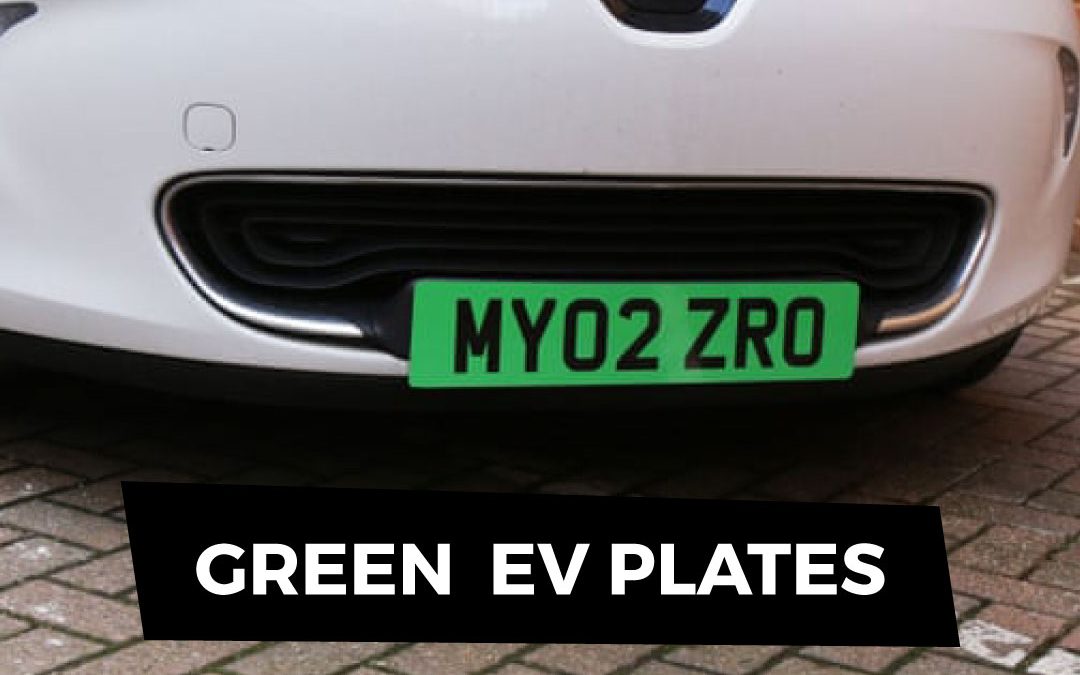
Green coloured number plates will be issued for electric cars under government plans to encourage drivers to buy zero-emission vehicles. The government said the new licence plates would make the least polluting cars easily identifiable and help their drivers benefit from incentives such as free parking or access to clean air zones. A consultation has been launched on the proposals, modelled on a scheme in Canada which appeared to push up electric car sales. The transport secretary, Grant Shapps, said: “Green number plates are a really positive and exciting way to help everyone recognise the increasing number of electric vehicles on our roads.
“By increasing awareness of these vehicles and the benefits they bring to their drivers and our environment, we will turbo-charge the zero-emission revolution.”
The Department for Transport said the green number plates would provide a useful visual identifier for local authorities pushing schemes for zero-emission vehicles, potentially allowing them to use bus or other priority lanes. The plates would retain black lettering but on a green background, although the design could be modified to a simple green stripe or blob after the consultation. The government’s behavioural insights team (Bit) said the distinctive plates would make people aware of fellow drivers’ decisions to drive greener vehicles. Elisabeth Costa, a senior director at Bit, said: “The number of clean vehicles on our roads is increasing but we don’t notice, as it’s difficult to tell clean vehicles apart from more polluting ones. Green number plates make these vehicles, and our decision to drive in a more environmentally friendly way, more visible on roads. “We think making the changing social norm noticeable will help encourage more of us to swap our cars for cleaner options.” The government has said it wants to ban the sale of fossil-fuelled cars after 2040, as part of its Road to Zero strategy, although hybrids are currently exempted. Shapps has said he would push for a 2035 deadline instead. The consultation will seek views on what types of vehicles should be included in the green plate scheme. Hybrids and electric cars were both included in the scheme in Ontario, Canada, which introduced green plates almost a decade ago, allowing drivers to use lanes otherwise reserved for high-occupancy vehicles.
The UK government is also currently consulting on whether all new homes with parking space should have mandatory electric car charge points built in.



 But what about the striking and ‘futuristic’ looks, what the hell was he thinking, right? Believe it or not the angular shape and hard lines are not from a fevered dream or simply intended to differentiate the product visually, although they certainly do that, in actual fact the design was informed by the function and yes, you guessed it, cost. The design features almost no curves, meaning that the body panels are much easier to produce, and the glass can be made from flat sheets, which are far cheaper to produce than windows with complex curves and seals. And speaking of the (ahem) unbreakable glass, this is supposedly being made from transparent metal, meaning it will be far stronger than normal silicon based glass sheets, although currently their website says it uses ‘polymer-layered composite’, which is more like traditional windscreens. So after all the dust from the launch has settled, and whether you love or hate the controversial looks, one thing is for certain; the Cybertruck is an example of Elon Musk attempting to disrupt yet another well established market sector, and make us all re-think what know about how things should work. We love it.