
£15,000 Government Loans for Solar Panels and Battery Storage:
The Warm Homes Loan Scheme Explained
Updated: 6 November 2026 | Estimated reading time: 9 minutes
A major change in how UK households can pay for solar panels and home batteries could help thousands more people reduce their electricity bills without finding thousands of pounds upfront.
The Government’s new Warm Homes Loan Scheme, launched on 27 October 2026, introduces interest-free and reduced-interest finance for home energy improvements, including solar panels, battery storage and heat pumps. The scheme should be opening for applications in Spring 2027.
With supported borrowing limits of up to £15,000 for solar panels and £15,000 for electrical battery storage, the initiative could remove one of the biggest obstacles to generating and storing electricity at home: the initial installation cost.
For many households, solar energy has always made financial sense over the longer term. The difficulty has been finding the money to install it in the first place. This new scheme could change that, opening up renewable energy to homeowners who previously felt that solar panels and batteries were financially out of reach.
What is the new £15,000 Warm Homes Loan Scheme?
The Warm Homes Loan Scheme is a UK Government-backed initiative designed to make energy-saving improvements more affordable by reducing the cost of borrowing. Rather than paying the full cost of solar panels or battery storage immediately, eligible homeowners can use finance offered by participating lenders and repay the money over an agreed period.
Depending on the lender and finance product, this could mean:
-
Interest-free borrowing at 0%.
-
Reduced interest rates compared with equivalent standard lending.
-
Installation without an upfront deposit.
-
Repayment periods extending over several years.
-
The opportunity to start benefiting from lower energy bills while paying for the improvements.
The Government says its support can enable interest rates to be reduced by as much as five percentage points compared with the lender’s normal rate.
Importantly, this is a loan, not a grant. The amount borrowed must still be repaid, and eligibility, interest rates and repayment terms depend on the individual lender. The scheme is available across England, Scotland, Wales and Northern Ireland.
How much can you borrow for solar panels and home batteries?
The Warm Homes Loan Scheme supports a range of renewable heating and electricity technologies:
| Home energy improvement | Maximum supported loan |
|---|---|
| Solar photovoltaic (PV) panels | £15,000 |
| Home battery storage | £15,000 |
| Air-to-water heat pumps | £20,000 |
| Air-to-air heat pumps | £10,000 |
| Ground source heat pumps | £35,000 |
| Biomass boilers | £20,000 |
| Heat network connections | £7,500 |
| Micro-renewable energy systems | £20,000 |
Note: Air-to-air heat pump support is dependent on the availability of the relevant MCS certification.
The solar and battery figures are individual technology limits, not an automatic entitlement to borrow £30,000 for a combined installation. Each lender determines which systems it finances and how much a household can borrow.
For example, one participating finance arrangement currently supports solar panels with or without an accompanying battery under a combined £15,000 limit. Standalone batteries may not be available through every lender.
The important point is that the Government has specifically recognised both solar generation and battery storage as technologies worth supporting, allowing homeowners to explore the most suitable combination for their property.
Why the Warm Homes Loan Scheme could be a game-changer for UK households
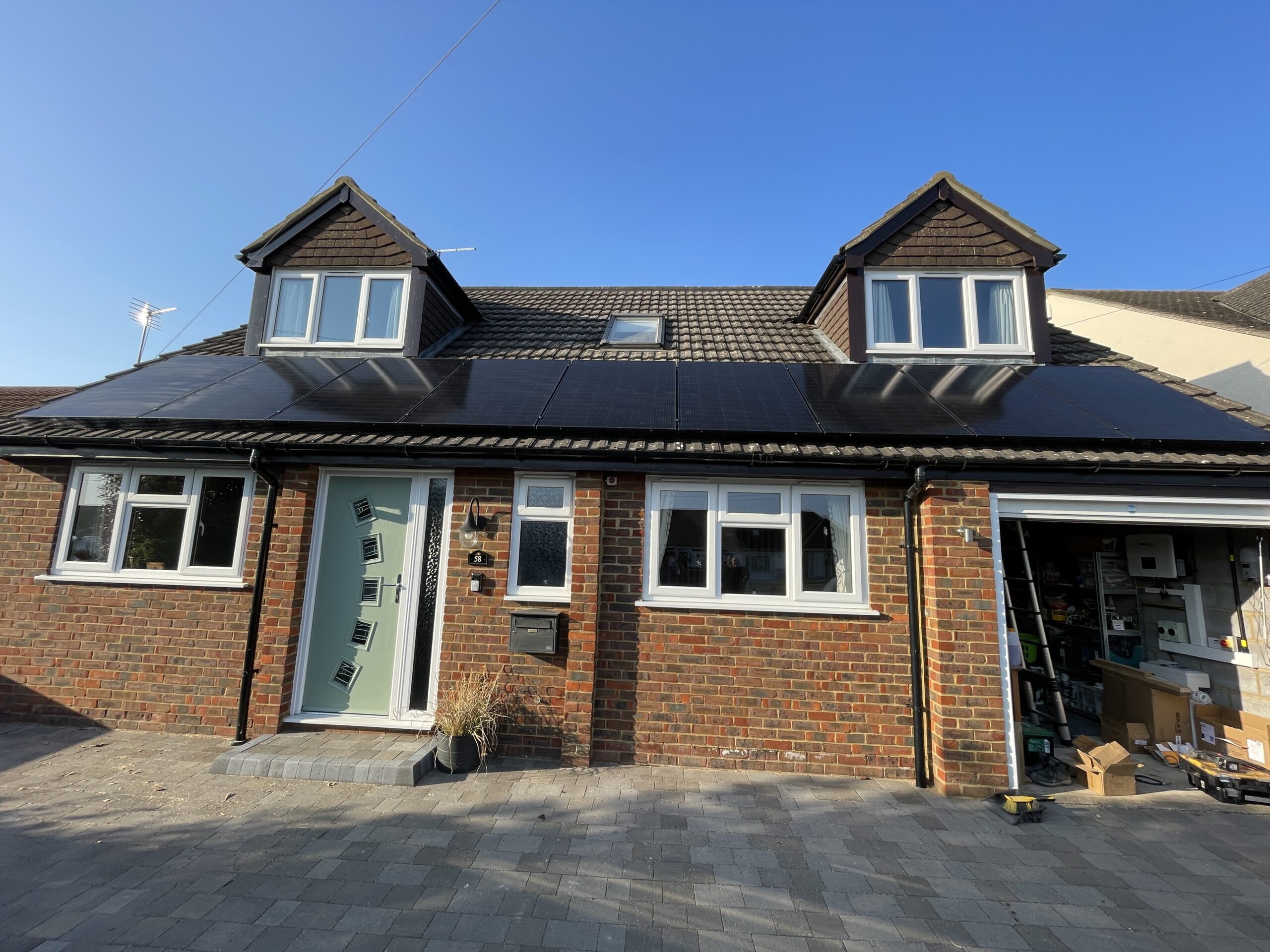 For years, one of the biggest inequalities in household energy costs has been the ability to invest in technologies that reduce future bills. For decades now, households with sufficient savings have been able to install solar panels, purchase home batteries and reduce their reliance on expensive grid electricity.
Those without spare capital, including many households feeling the greatest pressure from rising energy bills, have often been unable to make the same investment.
That can create a frustrating situation: the people who would most benefit from reducing their electricity costs may be the least able to afford the equipment needed to achieve those savings.
The Warm Homes Loan Scheme helps address this barrier by making the initial cost more manageable.
Instead of having to save for years before installing solar panels, eligible homeowners can explore finance that spreads the investment across an extended period. This matters for several reasons.
First, households may be able to start reducing their electricity purchases much sooner. Second, they can retain savings for emergencies rather than using them all on an installation. Third, lower-cost finance can make renewable technologies accessible to a wider range of homeowners, including those who do not qualify for income-related grants. Finally, generating electricity at home can reduce exposure to future changes in electricity prices.
There is one important qualification: a loan still creates a financial commitment. Households on tight budgets need to consider affordability carefully, and predicted electricity savings should never be treated as guaranteed loan repayments.
Nevertheless, reducing the initial financial barrier represents an important step towards making the benefits of renewable energy available more widely.
How much could solar panels and battery storage save you?
Solar for the average household will usually cost between £5000-£10000, and usually takes 5-7 years to pay for itself in domestic settings. This means savings on energy usually looks like around £750-£2000 per year, though this could be more or could be less depending on your energy usage. Solar alone usually can cover 30-50% of your energy usage, sometimes more, but with a solar and battery storage together you get 100% off grid. This means that for a few extra thousands pounds you can reduce your energy bills to nil. In today’s climate where all costs including energy continue to rise, this can provide not only a huge relief now with regards to your monthly outgoings, but it can give you and your family reassurance for the future too.
It’s interesting that the Government estimates that installing solar panels, battery storage and a heat pump together could reduce household energy bills by up to £550 per year, with a further potential saving of £300 annually through an appropriate time-of-use electricity tariff. Based on the averages and assumptions used that then gives a possible combined saving of up to £850 a year for a household, but we are generally seeing greater savings for average sized households and getting a battery in conjunction also makes a significant impact.
Actual savings from solar panels and batteries of course depend on several factors, including the size of the installation, the property’s electricity consumption, how much solar electricity is used directly, export payments and the electricity tariff. We can give you an accurate estimate very quickly – just send us an email with your address and a recent energy bill.
Battery sizing for your home
Most home battery installs usually are 5kWh, 10kWh or 15kWh units – and often these are modular and scalable so we normally recommend matching your battery size closely to your usage as you can always install another 5kWh unit if you need to upsize down the line. This is the best approach if money is tight (which usually it is) and it can maximise your savings with the least spend, however if you want to future proof your home you can always size up slightly.
Why solar panels and battery storage work so well together
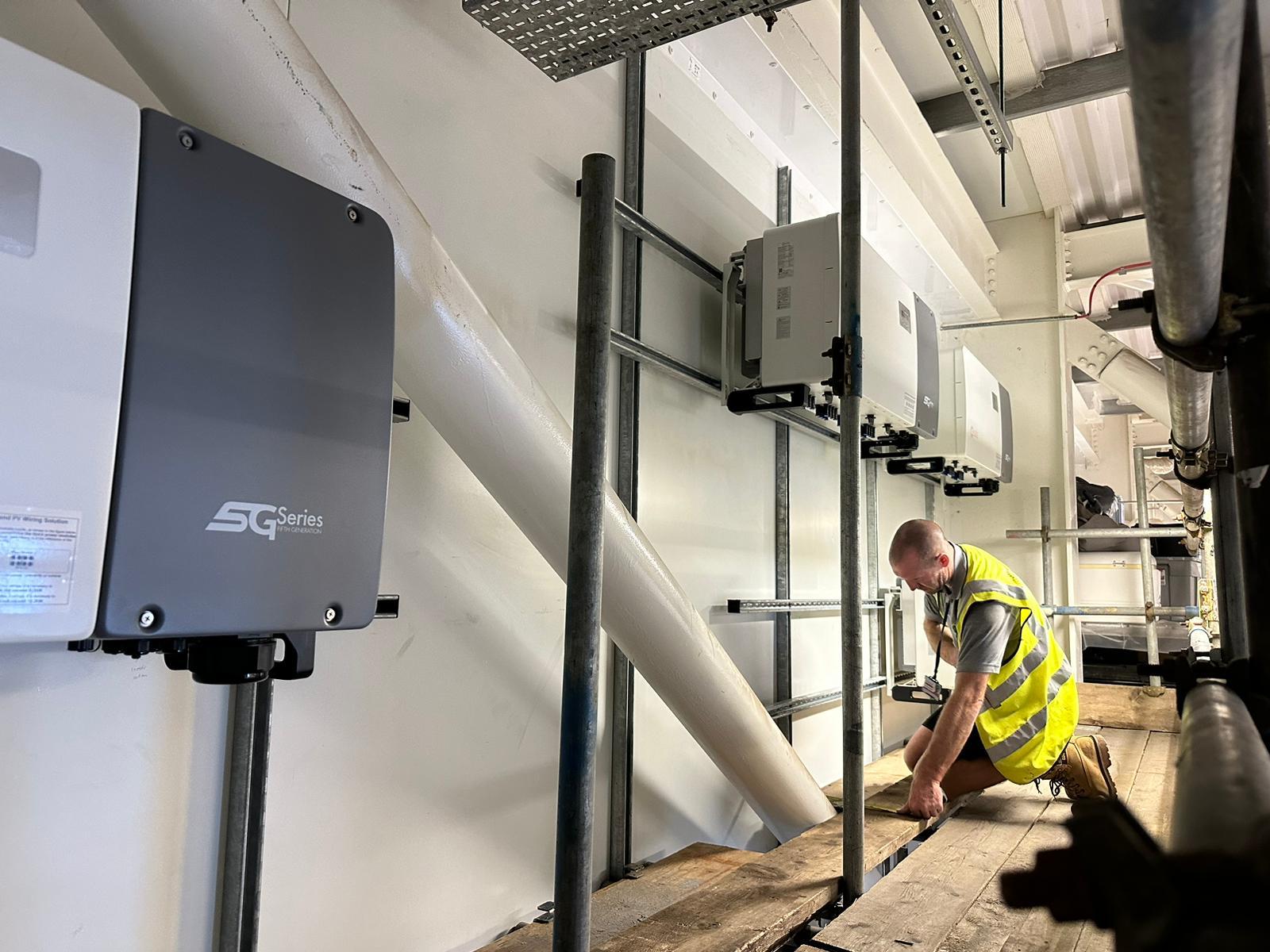 Solar panels and batteries perform different but complementary jobs.
Solar panels generate electricity from daylight, allowing the property to use renewable electricity instead of purchasing the same amount from an energy supplier.
However, the greatest solar generation often occurs around the middle of the day, when many households are using relatively little electricity.
Without battery storage, unused solar electricity is normally exported to the grid.
A home battery offers another option.
It can capture surplus electricity generated during the day and make it available later, such as during the evening when lighting, cooking and household appliances increase electricity demand.
This can help maximise the amount of solar electricity consumed within the property.
Battery storage can also save money without solar panels
An increasingly valuable feature of modern home batteries is their ability to charge using grid electricity at different times of day. Some smart electricity tariffs offer cheaper rates overnight or during other off-peak periods, which means a compatible battery can charge when electricity is cheaper and supply the home during more expensive periods.
This means battery storage can provide financial benefits even without solar panels, although the level of savings depends on the tariff, charging costs, battery efficiency and household usage. It also makes batteries particularly interesting for households with electric vehicles, heat pumps or higher evening electricity demand.
Under the Warm Homes Loan Scheme, whether battery-only installations qualify depends on the rules that will be outlined when the offer is fully launched – however we would expect to see batteries as a solution people can purchase as a standalone option for the above reasons.
Can you take your home battery with you when you move house?
One often-overlooked advantage of a home battery is that, unlike roof-mounted solar panels, some battery systems can potentially be removed and installed at another property.
For homeowners who expect to move in the future, this could make battery storage a more flexible investment. Rather than automatically leaving the equipment behind, it may be possible to take the battery to the next home and continue benefiting from it.
However, moving a battery is not as straightforward as moving an ordinary household appliance. A qualified installer would need to assess the system, disconnect it safely, transport it appropriately and confirm that it is suitable for installation at the new property.
The battery’s warranty, compatibility with the new electrical installation, removal costs, lender conditions and any property sale agreement would also need to be checked. Some systems are easier to relocate than others. In certain cases, the cost or practical difficulties could make leaving the battery in place more sensible. If you think you might move house in the next few years, discuss battery portability before choosing your system. A suitably designed installation may provide more flexibility in the future.
Who is eligible for the Warm Homes Loan Scheme in 2026?
The scheme is intended to help property owners who want to improve the energy efficiency of a residential building but would prefer to spread the cost. Under the published Government eligibility guidance, applicants must own the property, with or without a mortgage. The property must be residential and located in the UK.
This means the scheme is relevant to homeowners, and potentially private landlords, although individual lenders may impose additional restrictions. There is no general requirement to receive benefits or fall below a particular income threshold, however, applicants must still meet the lender’s creditworthiness, affordability and other eligibility requirements.
Tenants cannot normally apply for a loan to improve a property they do not own, but they may be able to discuss suitable energy improvements with their landlord. For households on lower incomes, it is especially important to investigate grant funding before taking on debt. Some people may qualify for fully funded improvements instead through the solar grants for low income households.
Could you qualify for free solar panels instead?
Not every household will need to borrow money. The Government’s separate Warm Homes: Local Grant programme provides energy efficiency improvements for qualifying households in England.
Depending on eligibility, available support and a home assessment, these improvements may include solar panels, insulation, heating systems and other measures. The programme generally targets privately owned homes with an EPC rating of D to G, where household income is £36,000 or below, or alternative postcode or benefits criteria are satisfied.
For eligible households, solar can be completely free. It’s therefore vital that households facing the greatest financial difficulties should check whether grant assistance is available before considering a repayable loan. Find out more through the Government’s Warm Homes: Local Grant guidance.
Which banks and lenders offer the Warm Homes Loan Scheme?
The Government initially announced ten participating lenders, with more providers and finance products expected to become available as the scheme develops.
The first group includes:
-
HomeServe, working with E.ON
-
Hometree Finance
-
Propensio
-
Secure Trust Bank
-
Selina Finance
-
South Manchester Credit Union
-
Sunsave
-
Tandem Bank
-
The Money Co-op
-
thisbank
Not all lenders offer identical arrangements. Some work exclusively with approved installation partners, while others allow customers to select their own MCS-certified installer.
For instance, of one installation providers above has advertised Warm Homes finance at 4.6% representative APR over terms of up to ten years and 6.0% representative APR over fifteen years. This.is an example of just one provider’s published terms.
Are the new government solar panel loans really interest-free?
Some are, but not all. The Warm Homes Loan Scheme includes both 0% interest products and loans carrying reduced rates of interest. The Government has worked with lenders to lower borrowing costs by as much as five percentage points compared with their normal products.
For example, if an equivalent ordinary loan would carry an 8% interest rate, an eligible scheme loan might be offered at 3%, depending on the lender and its terms. The difference can be significant over a long repayment period. The Government illustrates the potential benefit with a £10,000 loan over seven years, suggesting that an eligible borrower might save up to £285 annually on repayments compared with an example standard loan. Nevertheless, homeowners should always compare the full cost of financing an installation, not simply the advertised interest rate.
Why the lowest monthly payment is not always the best deal
A longer loan term often reduces monthly repayments, making the installation appear more affordable. However, where interest is charged, extending the term can substantially increase the total amount repaid. Repayment periods may range from a minimum of three years to as long as thirty years for certain products.
Before accepting finance, it is worth asking:
-
What is the representative APR, and what rate will I actually receive?
-
How much will I repay in total?
-
Are there arrangement fees, monthly charges or early repayment penalties?
-
Is the loan unsecured, or is it secured against my property?
-
What happens if I move house before the finance is repaid?
-
Is the installation competitively priced compared with equivalent cash quotations?
A secured loan can place your property at risk if you fail to keep up repayments. It is also worth obtaining alternative installation quotations. A subsidised loan is not necessarily good value if the equipment or installation is more expensive than comparable offers elsewhere. Consumer finance commentators, including MoneySavingExpert, have highlighted these considerations as important safeguards for households considering the scheme.
Can the Warm Homes Loan Scheme be combined with other government grants?
Yes, in certain circumstances. For example, homeowners installing an eligible heat pump may be able to combine finance with support through the Boiler Upgrade Scheme, which can provide grants of up to £9,000 for qualifying installations.
In Scotland, relevant Home Energy Scotland grants may also be available alongside suitable finance – however, the same installation cost cannot be funded twice through different government support schemes. For homeowners considering solar panels, battery storage and a heat pump together, it may therefore be worth investigating both grants and loans as part of a wider home energy improvement plan. Eligibility and funding combinations should always be confirmed before committing to installation.
Why choosing an MCS-certified solar installer matters
Solar panels and battery storage are long-term investments, and the quality of the design and installation can have a substantial impact on their performance. Under the Warm Homes Loan Scheme, installations must normally be completed by an installer certified through the Microgeneration Certification Scheme, commonly known as MCS. MCS certification provides an established framework for technical quality, installation standards and consumer protection.
A good installer (like us!) will help homeowners understand the practical implications of their investment. This includes assessing the property’s roof, reviewing electricity consumption, designing an appropriately sized system, estimating generation and explaining how battery storage could improve self-consumption. We help you understand these aspects before, during and after installation, and will help you get set up on your tracking app so you can see your generation and how much it is saving you.
The best system is not necessarily the largest or most expensive – it is the one that makes the most sense for the individual household. We always tailor to what you need, and share all the options so you can customise as you see fit.
How to apply for a Warm Homes Loan for solar panels
The application process will be outlined in more detail soon, but you can prepare by taking the following steps:
-
Review your electricity consumption. Gather recent energy bills and consider how your electricity usage might change if you purchase an electric vehicle or install a heat pump. (We can help you with this latter part)
-
Obtain a professional solar assessment. Ask an MCS-certified installer for a quotation showing the estimated electricity generation and projected savings.
-
Check your eligibility for grants. Establish whether other government assistance might be more appropriate or could help with separate improvements.
-
Compare participating finance providers. Review interest rates, repayment periods, fees, installer restrictions and the total cost of borrowing.
-
Submit your application. Apply through the outlined system in Spring 2027, and complete the required affordability and credit checks.
-
Arrange the installation. Once finance has been approved, proceed with the agreed system and qualified installer (the government scheme may recommend an installer, but you can often specify the installer you would like to use – eg. us)
-
Keep the documentation. Retain your quotation, finance agreement, invoice, proof of payment and MCS certification.
-
Optimise your energy usage. Once the equipment is operating, review electricity tariffs and battery settings to make the best use of your new system.
Homeowners can also consult the official Warm Homes Loan Scheme guidance on GOV.UK for current application information.
Frequently asked questions about the £15,000 solar and battery loan scheme
Q: Is the Government giving away £15,000 for solar panels?
A: No. The £15,000 is a maximum supported loan amount, not a cash grant. The borrowing must be repaid under the terms agreed with the lender. Separate government grant schemes may be available to eligible households.
Q: Can I get an interest-free loan for solar panels?
Potentially, yes. Some participating lenders offer 0% interest products, but others offer reduced-interest finance. Availability depends on the provider and the applicant’s eligibility.
Q: Can I borrow £15,000 for solar panels and another £15,000 for a battery?
The Government lists separate supported limits of £15,000 for solar PV and electrical battery storage. This does not guarantee that one household can borrow £30,000, as individual lenders may have combined borrowing limits and different product conditions.
Q: Can I get a loan for battery storage if I already have solar panels?
Potentially. Battery storage is an eligible technology under the scheme, but individual lenders may restrict finance to batteries installed alongside new solar panels. Check the terms before applying.
Q: Do I need to receive benefits to qualify?
No. There is no general benefits requirement for the Warm Homes Loan Scheme. However, lenders will assess your financial circumstances, credit history and ability to repay.
Q: Can pensioners apply for the Warm Homes Loan Scheme?
Yes, potentially. There is no general age-based exclusion in the Government’s published scheme eligibility guidance, although lenders may apply their own age, income and repayment-term criteria.
Q: Can landlords apply for solar panel loans?
The Government’s eligibility rules cover ownership of residential property, including potential applications by private landlords. However, not all finance providers support landlord applications, so the individual lender’s conditions must be checked.
Q: Can tenants apply?
Tenants generally cannot apply directly because the scheme requires applicants to own the property. However, a landlord may be able to arrange qualifying improvements.
Q: Do I have to pay a deposit?
Not necessarily. Some of the scheme’s finance products allow installation without an upfront payment, although terms vary between providers.
Q: Will solar panels eliminate my electricity bill?
Not usually. Solar panels can substantially reduce the amount of electricity purchased from the grid, but most households will still need grid electricity at certain times. Standing charges and other tariff costs may also remain.
Q: Will a battery keep my lights on during a power cut?
Not automatically. Some battery installations can provide backup electricity, but the system must be specifically designed and equipped for that purpose. Standard grid-connected batteries may shut down during an outage.
Q: Can I charge a home battery using cheap overnight electricity?
Yes, provided the battery system supports scheduled grid charging and the electricity tariff makes this worthwhile. Many modern systems can store lower-cost electricity for use during more expensive periods.
Q: Can I take a battery with me if I move?
Some battery systems can be professionally removed and reinstalled elsewhere. However, this depends on the equipment, warranties, installation requirements and associated costs. Any finance agreement or house sale arrangements must also be considered.
Q: Do solar panels work during the British winter?
Yes. Solar panels generate electricity from daylight rather than requiring direct sunshine, although generation is generally lower during shorter winter days.
Q: Can I repay my solar loan early?
This depends on the lender. Some agreements may permit early repayment without additional charges, while others may apply conditions or fees. Always check before signing.
Q: Can I still receive payments for exporting solar electricity?
Yes, potentially. Eligible solar installations can receive export payments through the Smart Export Guarantee or other export tariffs offered by electricity suppliers. Eligibility and rates vary, and export income should not be treated as guaranteed.
Q: Is the Warm Homes Loan Scheme available throughout the UK?
Yes. The Government has confirmed that the scheme covers England, Scotland, Wales and Northern Ireland, subject to the availability and criteria of participating lenders.
Q: Is now the right time to invest in solar panels and battery storage?
For solar the decision should start with how long you plan to stay in the property – if you are thinking 5 years minimum, then yes, solar is a great investment right now. If you might be moving in the next couple of years, then no, it’s not the right time. However if you are looking to move, a battery installed with readiness to be removed and reinstalled in your new property is absolutely a solution that could save you money now and in your next property.
It is also important to note that for some households, paying outright may remain the most cost-effective option. For others, affordable finance could allow them to begin benefiting from renewable energy considerably sooner. If you are looking to more home but could afford the invest to save measure of purchasing a battery, you can remove the loan interest costs for the best financial return – think of it as investing now for cheaper energy for the next 10-15 years (or more!). The finance option just makes the cost less daunting and allows you to pay for the unit as you save.
Find out whether solar panels and battery storage could work for your home
Every property has different energy requirements, so getting the right advice before making an investment is essential. A professional solar assessment can establish how much electricity your roof could generate, whether battery storage would be worthwhile, the likely installation costs and how different finance arrangements might affect the overall savings – we can do one of these for you quickly and completely for free.
Interested in reducing your electricity bills without paying the entire installation cost upfront?
Contact our team to discuss solar panels, battery storage and the options available under the Warm Homes Loan Scheme – just call 01536 744640.
We can help you explore a system suited to your home and needs, and get you prepped and ready for the launch of the scheme in 2027.
Finance disclaimer: This article provides general information and is not financial advice. Loan availability, rates and eligibility depend on individual lenders. No finance is guaranteed, and installation savings vary between properties. Confirm current conditions with the lender before entering into an agreement.
0 Comments