

Solar Powered EV Chargers: Full Guide and Top Picks
by Emily Fedorowycz | Oct 27, 2026 | Electric Vehicles, Solar
The complete guide to charging your electric car with solar & the best solar EV chargers on the market
As electric vehicles become increasingly common, many homeowners and businesses are asking the same question: can solar panels power an EV? The answer is yes, and when designed correctly, a solar-powered EV charging system can significantly reduce running costs, lower carbon emissions and make far better use of the electricity your solar panels generate.
Modern smart EV chargers do far more than simply charge a car. They can communicate with your solar PV system, home battery, electricity tariff and even weather forecasts to optimise charging automatically. The result is a more efficient home energy ecosystem where your solar panels, battery storage and electric vehicle work together.
What is a solar powered EV charger?
A solar powered EV charger is a smart electric vehicle charger that prioritises electricity generated by your solar panels before importing power from the grid. Unlike a standard charger, it can monitor household electricity demand and adjust the charging speed to match surplus solar generation.
This allows you to charge your car using clean, renewable energy that would otherwise be exported to the grid.
Some chargers can also combine solar generation with grid electricity, allowing faster charging when needed while still maximising self-consumption. Modern smart chargers are increasingly designed to integrate with solar PV systems, home batteries and dynamic electricity tariffs.
Why solar and electric vehicles are the perfect combination
Solar panels generate the most electricity during daylight hours, while many electric vehicles spend long periods parked at home or at work. A smart charger can take advantage of this by automatically charging whenever excess solar energy is available.
The benefits include:
- Lower electricity bills
- Reduced reliance on the National Grid
- Lower carbon emissions
- Greater energy independence
- Better return on your solar investment
- Reduced export of low-value surplus electricity
For households with battery storage, surplus solar can first charge the home battery before charging the vehicle, depending on your chosen priorities.
How does solar powered EV charging work?
In short, a smart EV charger detects surplus energy and can redirect extra energy to your vehicle. A solar-compatible charger, such as the myenergi Zappi, monitors electricity flowing to and from your property. Your home will usually use the energy first unless you alter settings to favour your car.
When excess solar electricity is available, the smart chargers can divert that energy into charging your electric vehicle without you having to do anything. Clever!
Can solar panels fully charge an electric car?
Yes, although it depends on several factors.
The size of your solar array, the battery capacity of your vehicle, the weather, the season and how much you drive all affect how much charging can be achieved using solar alone.
As an example:
- A typical 4 kW domestic solar system may generate around 3,500 to 4,000 kWh each year
- Many modern EVs consume between 3 and 4 miles per kWh
- That equates to approximately 10,000 to 16,000 miles of driving annually if all of the solar generation were used for vehicle charging
In reality, some electricity will also power your home, but even partial solar charging can substantially reduce fuel costs.
The key components of a solar EV charging system
A complete system usually includes:
- Solar panels – The larger the array, the more surplus energy is available for vehicle charging.
- Smart inverter – The inverter converts DC electricity from your panels into usable AC electricity and often provides the data needed for intelligent charging.
- Home battery (optional) – Battery storage allows excess daytime generation to be stored for evening charging or household use.
- Smart EV charger – This is the component that manages charging and communicates with the rest of your energy system.
- Energy monitoring system – Current transformers (CT clamps), smart meters or dedicated energy management systems monitor household consumption and available solar generation.
Smart charging modes explained
Most solar-compatible chargers offer several charging modes.
1. Solar only
- Charges exclusively from surplus solar generation.
- This maximises renewable energy use but charging may pause if cloud cover reduces output.
2. Eco mode
- Uses available solar first before supplementing with small amounts of grid electricity.
- This provides faster and more consistent charging.
3. Fast charging
- Charges at the maximum available rate regardless of the electricity source.
- Ideal when you need the vehicle fully charged by a certain time.
4. Scheduled charging
- Charges during off-peak electricity tariffs overnight or when solar production is expected to be highest.
- Many chargers can automatically combine time-of-use tariffs with solar generation.
Choosing the best solar EV charger
When comparing chargers, look beyond charging speed. The best systems provide intelligent energy management.
Key features include:
- Solar surplus charging
- Dynamic load balancing
- App control
- Wi-Fi or Ethernet connectivity
- OCPP compatibility
- Scheduled charging
- Home battery integration
- Electricity tariff integration
- Vehicle priority settings
- Over-the-air software updates
Top picks for solar EV charger brands

These new 22kW Zappi fast chargers are helping this welding company usher in a new fleet of electric cars, and dramatically reduce their charge times from 30 hours to less than 3!
While there are dozens of chargers on the market, three products consistently appear at the top of independent reviews and installer recommendations for homes with solar PV:
- myenergi Zappi
- Ohme ePod
- Easee One
Each takes a slightly different approach, making them suitable for different types of homeowner.
myenergi Zappi
Best for: Maximum solar integration
The myenergi Zappi is widely regarded as the benchmark for solar EV charging. We highly recommend fitting this EV charger because it can detect when you’re making more power than you need and automatically divert it to charge your car. And you can even choose exactly how much of your extra power is used, meaning you can run your car on a mix of grid power and solar for extra speed, or 100% sunshine for the ultimate green driving experience.
Designed specifically for homes with solar PV, it automatically diverts surplus solar energy to your vehicle, reducing reliance on grid electricity. It also integrates with the wider myenergi ecosystem, including the Libbi battery and Eddi power diverter.
Pros
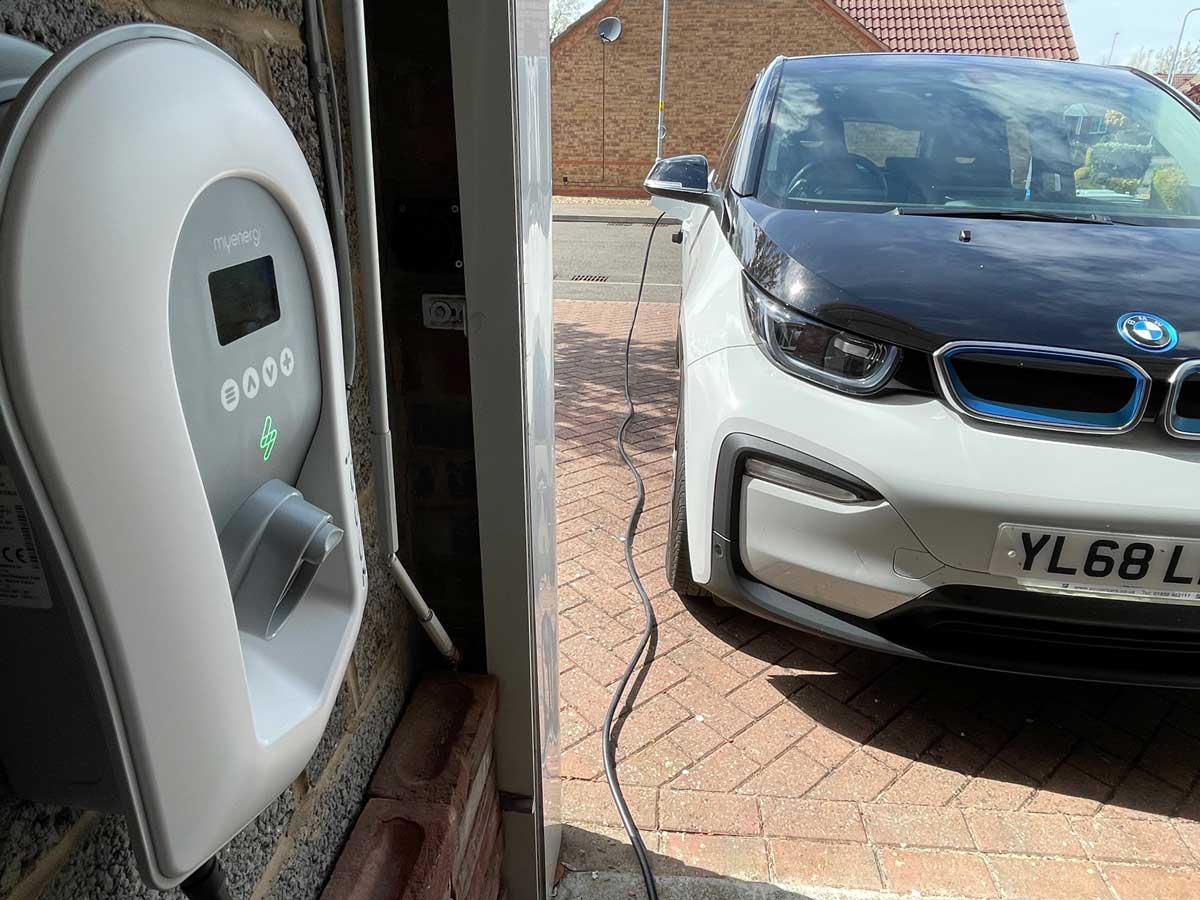
Another Zappi charger in action. The green light means it’s charging on 100% clean energy!
- Excellent solar-only charging modes
- Intelligent energy management
- Integrates with battery storage
- Future-proof renewable energy ecosystem
- Available tethered or untethered
Cons
- More expensive than some rivals
- Greater number of settings can take time to learn
- Design is practical rather than premium
Ideal for: Homeowners wanting to maximise solar self-consumption and build a fully integrated renewable energy system.
Ohme ePod
Best for: Smart electricity tariffs
The Ohme ePod focuses on reducing charging costs by intelligently combining solar generation with off-peak electricity tariffs. Its intuitive app automatically schedules charging to make the most of cheap-rate electricity while still supporting solar charging.
Pros
- Excellent tariff optimisation
- User-friendly app
- Compact, discreet design
- Simple to install and use
Cons
- Solar features aren’t as advanced as the Zappi
- Untethered only
- Less suitable for complex renewable energy setups
Ideal for: Drivers on time-of-use tariffs who want effortless, low-cost charging.
Easee One
Best for: Design and flexibility
The Easee One combines premium Scandinavian styling with intelligent charging features. Solar charging is available via the optional Easee Equalizer, making it a good choice for homeowners planning future upgrades.
Pros
- Stylish, compact design
- High build quality
- Flexible installation options
- Reliable Wi-Fi and 4G connectivity
Cons
- Solar functionality requires an additional accessory
- Fewer tariff integrations than Ohme
- Optional extras increase the overall cost
Ideal for: Homeowners who value aesthetics and want a charger that can adapt as their energy system evolves.
Which charger is right for you?
| Priority | Best Choice |
|---|---|
| Maximum solar charging | myenergi Zappi |
| Lowest charging costs | Ohme ePod |
| Premium design | Easee One |
| Battery storage integration | myenergi Zappi |
| Simple, automatic charging | Ohme ePod |
For homeowners with solar panels, the myenergi Zappi remains the strongest all-round choice thanks to its dedicated renewable energy features. If your priority is reducing electricity bills through smart tariffs, the Ohme ePod is hard to beat. If appearance and flexibility matter most, the Easee One offers a premium solution with room to grow.
Other popular solar-compatible EV chargers
Several chargers have developed strong reputations for solar integration. These include:
- myenergi Zappi
- Wallbox Pulsar
- go-e Charger
- KEBA PV Edition
- Hypervolt Home
- Andersen A3
- Easee Charge
Many support surplus solar charging, dynamic load balancing and app-based energy management, although features vary by manufacturer.
The best interfaces for integrating with solar
A good charger should communicate seamlessly with the rest of your energy system. Here are some of the key interface options for doing just that:
- CT clamps – The most common solution. These monitor electricity flowing into and out of the property, allowing the charger to detect surplus solar generation instantly.
- Smart meters – Many chargers use smart meter data to optimise charging based on household demand.
- Direct inverter integration – Premium chargers can communicate directly with compatible inverters, improving charging accuracy and energy management.
- Battery integration
- OCPP (Open Charge Point Protocol) – OCPP enables compatibility with a wide range of software platforms, making chargers more future-proof and suitable for commercial installations.
Some systems allow homeowners to decide whether surplus energy should:
- Charge the EV first
- Charge the home battery first
- Split energy between both
- Export surplus to the grid
Should you add battery storage?
Battery storage is not essential, but it can significantly improve the flexibility of your system. Benefits include:
- Evening EV charging using stored solar
- Backup power during outages (where supported)
- Greater self-consumption
- Reduced electricity imports
- Better use of winter solar generation
For households with large solar arrays, batteries often complement EV charging rather than replace it.
Solar charging vs cheap overnight tariffs
Many homeowners assume solar charging is always the cheapest option. The reality is more nuanced.
If your electricity supplier offers very low overnight EV tariffs, there may be times when charging overnight costs less overall than using daytime solar, especially if exported solar electricity attracts a competitive export payment.
The most effective energy strategy is often a hybrid approach:
- Use surplus solar whenever available.
- Charge overnight during low-cost tariff periods when necessary.
- Store excess daytime generation in a home battery where it provides the greatest value.
Modern smart chargers can automate this process, selecting the most economical energy source based on your settings, tariff and available solar.
Is a solar powered EV charger worth it?
If you are considering or have an EV, and will be in your current property for the next 5 years – the answer is yes.
A solar-compatible charger increases self-consumption, reduces reliance on imported electricity and helps maximise the value of your solar investment. Combined with battery storage and intelligent energy management, it creates an integrated system that can dramatically lower both household electricity costs and vehicle running costs.
As EV adoption continues to grow, installing a smart charger designed to work with solar is increasingly viewed as a future-proof investment that supports cleaner, cheaper and more efficient transport.