by Emily Fedorowycz | Oct 27, 2026 | Electric Vehicles, Solar
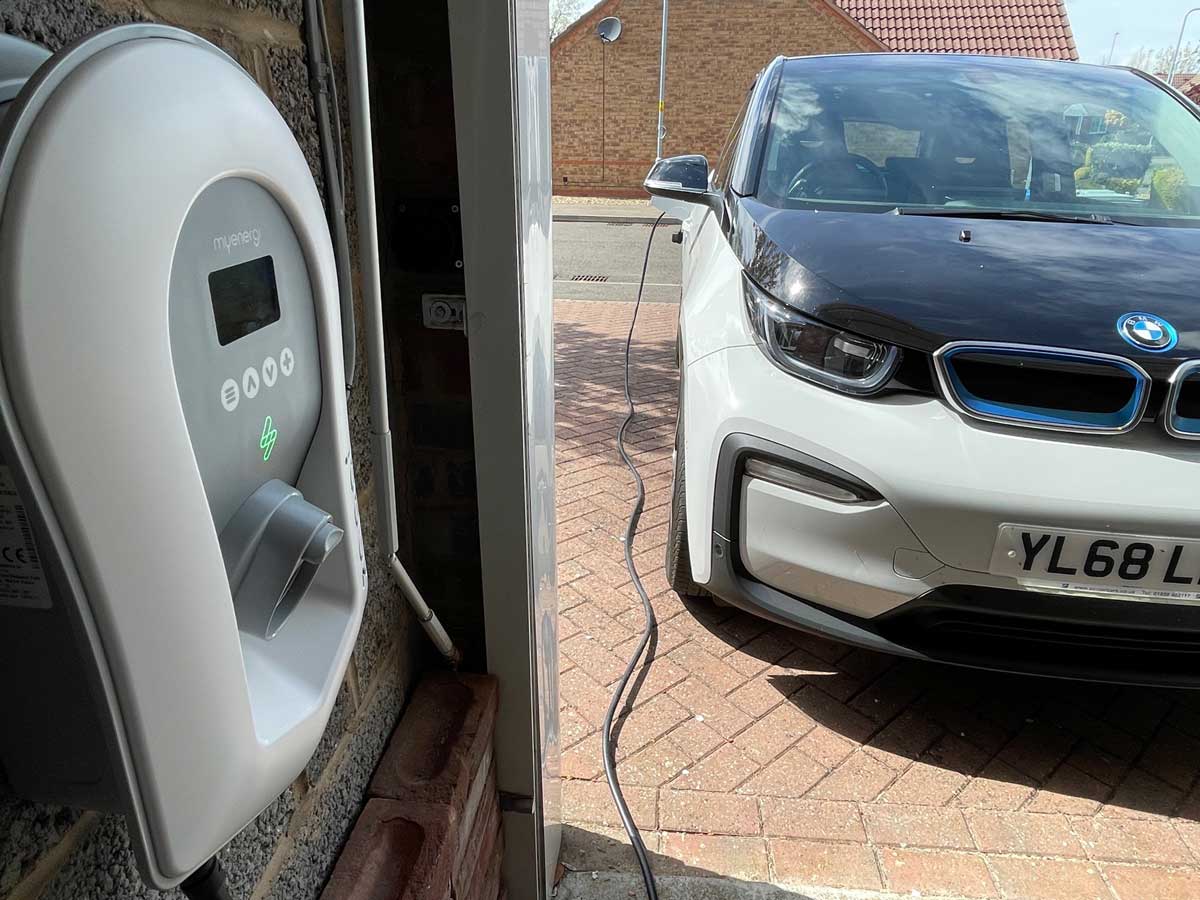
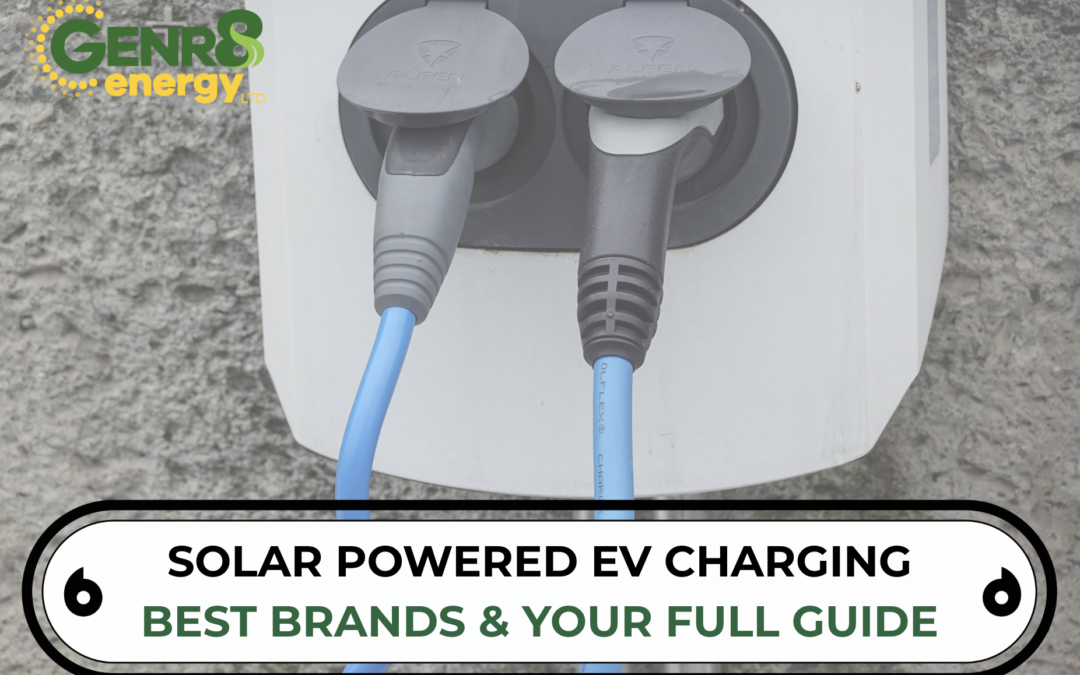
Solar Powered EV Chargers
by Emily Fedorowycz | Aug 18, 2026 | Uncategorized
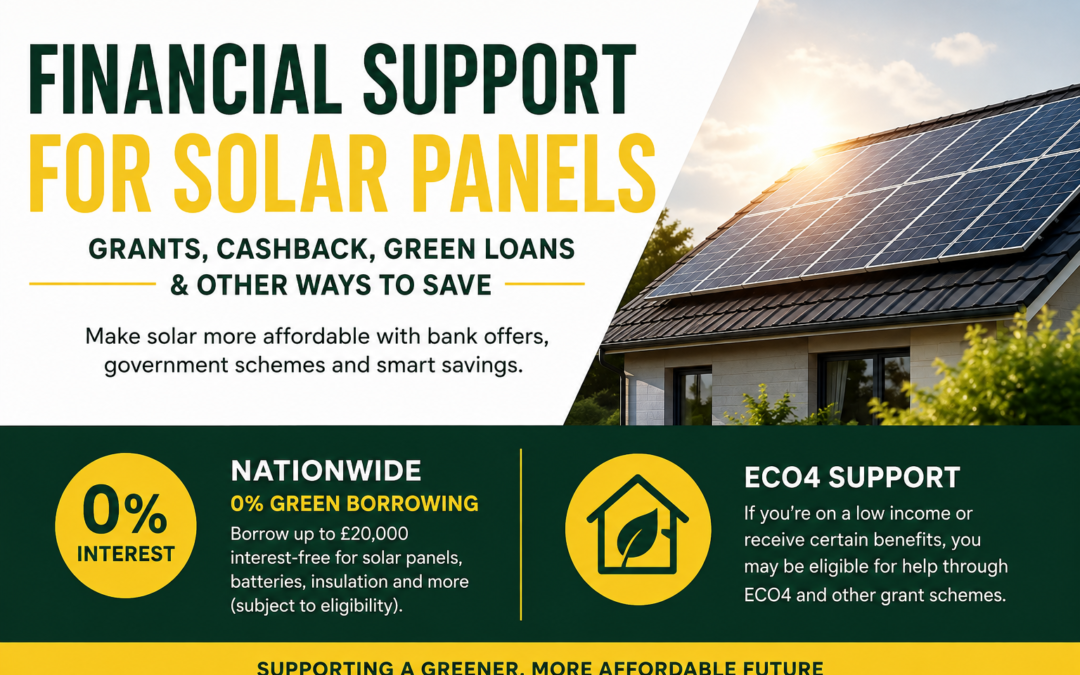
Financial Support for Solar Panels in the UK: What Help Can Homeowners Get?
Installing solar panels has never been more affordable. While the upfront cost can still seem significant, many UK homeowners are surprised to discover that banks, building societies and government schemes now offer a range of financial incentives to make switching to solar easier.
Whether you’re planning a new solar PV system, battery storage or an electric vehicle charger, there are several ways to reduce the cost and improve your return on investment.
Why are banks supporting solar installations?
Banks and mortgage lenders are increasingly offering incentives for homeowners to improve the energy efficiency of their properties. Solar panels can reduce household energy bills, increase EPC ratings and potentially add value to a home, making them an attractive investment for both homeowners and lenders.
Many lenders now provide cashback, interest-free borrowing or discounted loans specifically for renewable energy improvements.
Nationwide Building Society
Nationwide offers one of the most attractive schemes currently available. Eligible mortgage customers can apply for Green Additional Borrowing, allowing them to borrow up to £20,000 at 0% interest for approved energy efficiency improvements, including:
- Solar panels
- Home battery storage
- Heat pumps
- Insulation
- Double glazing
For many households this removes one of the biggest barriers to installing solar by allowing the cost to be spread over time without paying interest.
Barclays Greener Home Reward
Barclays offers a Greener Home Reward, providing qualifying mortgage customers with cashback towards the installation of energy-saving improvements. The amount offered has been fluctuating recently, so if you are a Barclays customer, check with them on the latest amount they are contributing.
Solar panels and battery storage are among the eligible improvements, helping homeowners reduce the overall installation cost.
Halifax Green Living Reward
Halifax has introduced one of the UK’s most generous cashback schemes. Eligible mortgage customers can receive £1,000 cashback when installing rooftop solar panels or battery storage systems through approved installers. For many installations, this can cover a significant proportion of the scaffolding or installation costs.
Lloyds Bank
Lloyds also offers Green Living incentives for qualifying mortgage customers. Depending on the improvement being carried out, homeowners may be eligible for cashback towards renewable energy installations, including solar PV systems and battery storage.
Virgin Money
Virgin Money provides green mortgage incentives that reward customers making energy-efficient home improvements. Solar panels, batteries and other qualifying upgrades may be eligible depending on the current offer available.
Santander
Santander periodically launches green mortgage promotions offering cashback or preferential borrowing for homeowners improving the energy performance of their property. These schemes change regularly, but this is definitely worth checking if you bank with Santander.
Green Home Improvement Loans
Several lenders now offer unsecured loans specifically designed for environmentally friendly home improvements.
These loans can typically be used for:
- Solar panels
- Battery storage
- Electric vehicle chargers
- Heat pumps
- Insulation
- Windows and doors
Green loans often feature lower interest rates than standard personal loans.
Government Support
While the UK no longer offers a nationwide grant that pays directly towards the cost of solar panels for most homeowners, there are still several valuable forms of support.
Smart Export Guarantee (SEG)
Once your solar panels are installed, you can earn money by exporting unused electricity back to the National Grid. Energy suppliers participating in the Smart Export Guarantee (SEG) pay homeowners for every unit of surplus electricity they export. The amount you receive depends on your chosen energy supplier, with some tariffs paying significantly more than others.
Zero VAT on Solar Panels
The UK Government currently applies 0% VAT on the installation of:
- Solar panels
- Battery storage (when installed as part of an eligible project)
- Certain other energy-saving materials
This immediately reduces the cost of installation compared with previous years.
Warm Homes Plan
The Government is also introducing the Warm Homes Plan, which is expected to provide low-interest or interest-free finance for eligible energy efficiency improvements, including renewable technologies.
Details continue to evolve, but it is expected to help more homeowners spread the cost of installing solar.
ECO4 and Local Authority Grants
Households on lower incomes or receiving certain benefits may qualify for assistance through:
- ECO4 grants
- Local authority energy efficiency grants
- Regional retrofit schemes
Eligibility varies depending on household income, benefits and property type. The ECO4 grants are only for a limited time as they are due to come to an end in early 2027.
Don’t Forget Battery Storage
Many financial support schemes now include battery storage alongside solar panels.
Adding a battery allows homeowners to:
- Store excess daytime generation
- Use more of their own electricity and often go completely off-grid
- Charge overnight on cheaper electricity tariffs
- Power the home during peak-rate periods
For households with electric vehicles, combining solar panels, battery storage and a smart EV charger can dramatically reduce charging costs, meaning you can run your home and your vehicle for pennies.
Can Solar Pay for Itself?
If you plan to be in your current home for the next 5 years, the answer is usually yes.
Savings come from several sources:
- Lower electricity bills
- Payments through the Smart Export Guarantee
- Reduced EV charging costs
- Protection against future energy price rises
- Potential increase in property value
When grants, cashback and preferential finance are taken into account, the speed of the solar payback becomes even quicker, making the savings and overall return on investment even more attractive.
Speak to an Experienced Solar Installer
Financial incentives change regularly and eligibility depends on your lender, mortgage product and property. If you want to explore solar but don’t know where to start and which schemes apply to your circumstances, reach out and we can help you maximise the available incentives. Contact us today!
By combining grants, lender rewards, export payments and smart energy tariffs, many UK homeowners are finding there has never been a better time to invest in solar energy. With the increasingly extreme summers and winters, heating and cooling your home can also be supported with solar, allowing you to live comfortably without breaking the bank.
Frequently Asked Questions
Q: Can I get a government grant for solar panels?
A: Most homeowners cannot access a direct government grant, but you may benefit from 0% VAT, Smart Export Guarantee payments and, if eligible, schemes such as ECO4 or local authority funding.
Q: Which bank offers the best help for solar panels?
A: Nationwide currently offers one of the strongest incentives through its 0% Green Additional Borrowing. Halifax also offers generous cashback for qualifying mortgage customers.
Q: Do banks lend money specifically for solar panels?
A: Yes. Several banks and building societies now offer green loans or preferential borrowing specifically for energy efficiency improvements, including solar panels and battery storage.
Q: Can I get help with battery storage too?
A: Yes. Many lender incentives and finance schemes now include home battery storage alongside solar panel installations, recognising the benefits of storing renewable energy.
Q: Is solar still worth it without grants?
A: In many cases, yes. The rule of thumb is whether you are planning to stay in your property for the next 5 years – if so it will pay for itself it that time, and put approximately 5% extra onto your property value. In addition, falling equipment costs, lower energy bills, Smart Export Guarantee payments and favourable electricity tariffs mean solar continues to offer an excellent long-term return for many UK homeowners.
by Emily Fedorowycz | Apr 28, 2026 | Uncategorized
Community Funded Solar for Your Organisation
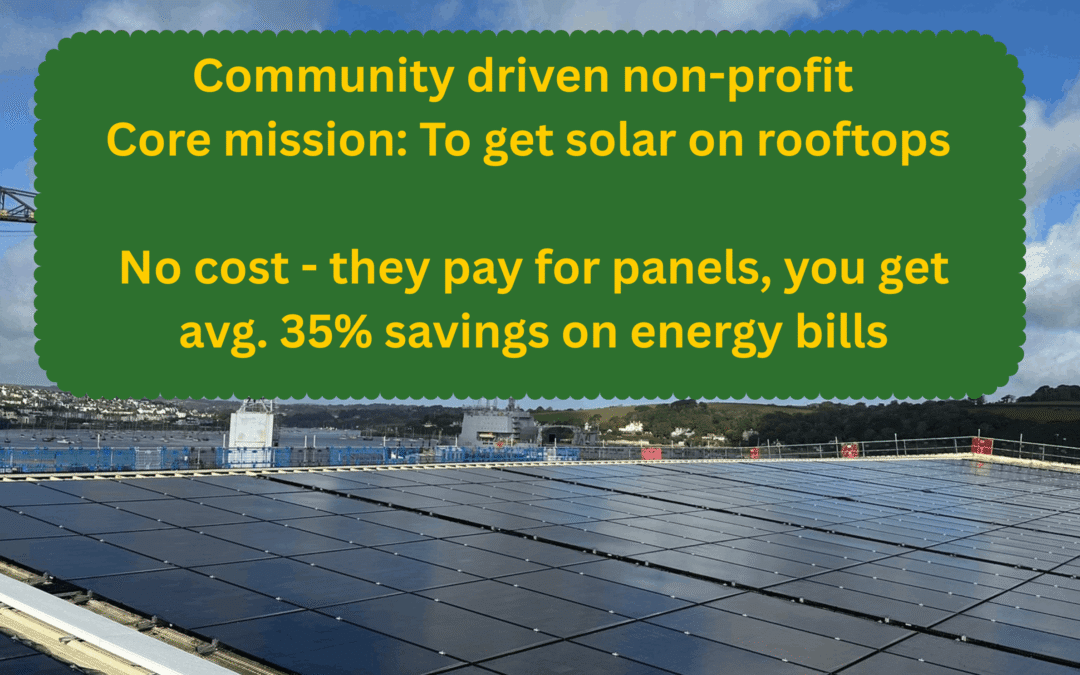
The Big Solar Co-op project was built around a simple idea: get solar on big rooftops as easily as possible The vision was also to help organisations and businesses benefit from renewable energy, without the traditional financial barriers that have often held people back.
Rather than relying on businesses to fund expensive installations themselves, the co-op uses a community-led funding model that allows solar to be installed at little to no upfront cost.
The vision behind Big Solar Co-op is to create a large network of rooftop solar systems across the UK, helping businesses unlock underused roof space and turn it into a practical asset that generates lower-cost electricity.
Unlike conventional solar developers that focus purely on commercial returns, Big Solar Co-op is driven by a broader purpose. The model is based on shared benefit. Community investors fund projects that help businesses reduce energy costs, while supporting the wider transition towards cleaner electricity generation.
This approach creates a circular benefit:
- Businesses reduce electricity bills immediately
- Community investment supports renewable infrastructure
- Rooftop spaces that would otherwise sit unused generate clean power
- Local and national carbon reduction goals are supported
- Organisations gain access to sustainability improvements without needing large budgets
For many organisations, rising electricity prices have become a significant challenge. Solar offers a way to create greater certainty over future energy costs, reduce dependency on grid electricity and improve operational efficiency.
Businesses that operate during daytime hours often see the greatest benefits because solar power is generated when the building is actively consuming electricity.
Solar with no upfront cost
Installing solar panels has traditionally meant a large upfront investment, which can make it difficult for businesses to move forward, even when the savings are clear. Big Solar Co-op removes that barrier by fully funding and installing commercial solar systems, allowing businesses to benefit from lower electricity costs immediately without needing to spend capital.
For many businesses, energy is one of the biggest and most unpredictable overheads. Solar can provide long-term protection against rising electricity prices while improving sustainability credentials and reducing carbon emissions. Businesses that operate during the daytime often benefit the most, because solar generates electricity when they are actively using power.
The Big Solar Co-op model is designed to make solar accessible, simple and low risk. Instead of paying for the system, businesses purchase the cheaper electricity generated by the panels installed on their roof.
How the Big Solar Co-op scheme works
Here is a quick outline:
- The co-op fully funds and installs the solar system
- You benefit from immediate energy savings of around 35%
- No capital outlay is needed
- You simply purchase the electricity generated at a reduced rate
- After 5 years, you may have the option to purchase the system outright and increase your long-term savings even further
Saving around one-third on electricity costs can make a significant difference to business overheads. Those savings can then be redirected into staffing, equipment, growth, investment or improving cash flow.
Unlike many traditional solar projects, there is no need to secure funding, finance or internal CapEx approval. This makes the scheme especially attractive for manufacturers, warehouses, offices, farms, schools, leisure venues and multi-site businesses.
The programme is completely free to access, and the Big Solar Co-op has received national recognition for its work through awards from Community Energy England, winning their Community Energy Excellence Award in 2025.
Why businesses choose this model
Businesses often choose the Big Solar Co-op approach because it offers:
- Immediate reduction in electricity bills
- No installation or equipment costs – or ongoing maintenance costs
- Improved sustainability and ESG credentials
- Reduced exposure to future energy price rises
- Better use of unused roof space
- Potential long-term ownership of the solar system, earning more savings
- Minimal disruption during installation
- No need for borrowing or finance agreements, meaning no ongoing administration or financial risk
For organisations trying to lower operational costs without making major capital investments, it can be one of the simplest routes into renewable energy.
How to Apply to Big Solar Co-op
To assess whether your site is suitable, Big Solar Co-op needs enough information to understand your roof, your energy use and when electricity is consumed. Below are the key details they need to create your quote, and you can send this direct to us at GENR8 Energy and we can help you get your quote.
You will need to share:
1. Annual electricity usage
Ideally this should be half-hourly electricity data for a full year. If unavailable, monthly usage for a full year can be used instead. Not sure how to find this data? Read on and we’ll give you some help finding it later in this article. Usually you can get this information form your energy supplier.
2. Cost per kWh
Provide the actual unit rate you pay per kWh, excluding standing charges but including usage-related levies. If you are unsure simply provide a monthly energy bill as this usually contains all of this information.
3. Roof location
Provide the what3words location for the roof or roofs where solar panels would be installed. If you don’t know, get in touch and we can help you figure this out.
4. Business activity
Explain what the business does and what electricity is used for.
For example:
- Office lighting and computers
- Refrigeration or cold storage
- Manufacturing machinery
- Industrial welding or fabrication
- EV charging
- Warehousing operations
- Food production equipment
5. Opening days and hours
Solar works best when a business consumes electricity during daylight hours, so this information helps assess potential savings.
6. Main contact
Provide the name, email and phone number of the person who will be championing the enquiry from your business.
How to get your annual electricity usage
Option 1: Login to your energy supplier portal and download data
In most cases you should be able to find your half hourly data in your energy supplier portal. You have to have this enabled as a feature, and if you’re not sure you can contact your energy provider to check.
Option 2: Request half-hourly data from your supplier
- Step 1: Contact your electricity supplier.
Ask for:
“Half-hourly electricity consumption data for the last 12 months in CSV format.”
- Step 2: Request it by MPAN or site address.
- Step 3: Save the file and forward it.
This data helps Big Solar Co-op accurately understand when electricity is used, which is critical when modelling savings.
Option 2: Use monthly electricity bills
If half-hourly data is unavailable, gather 12 months of electricity bills.
Record:
- Month
- kWh usage
- Total electricity consumed
Although less accurate, this still allows an initial assessment.
How to find your electricity unit cost
Find a recent electricity bill and look for the following:
- Unit rate (p/kWh)
- Day rate
- Evening or night rate if applicable
Do not include:
- Standing charge
- VAT
- One-off admin fees
In many cases, you can simply share a copy of your energy bill and the Big Solar Coop team can find what they need from this.
How to find your roof location using what3words
- Go to the what3words website or app.
- Search for your property.
- Zoom into the roof.
- Click the roof location.
- Copy the three-word reference.
- If there are multiple roofs, provide a separate reference for each.
What to send
Once you have gathered the information, send the following to our main email:
- Business name and site address
- Electricity usage data
- Cost per kWh
- Roof what3words location
- Business activity description
- Opening hours
- Main contact details
- Preferred communication route
You can contact us at any time with these details and we can arrange a quote and initial assessment.
Who else has benefited from Big Solar Coop?
Examples of organisations supported through community energy and rooftop solar programmes include schools, churches, industrial units, agricultural sites and commercial premises across the UK.
These include:
Age UK
Kerry Ingredients (manufacturer)
Eco-Pak (packaging)
Eden Court Medical Practice (hospitals)
by Emily Fedorowycz | Mar 31, 2026 | Electric Vehicles
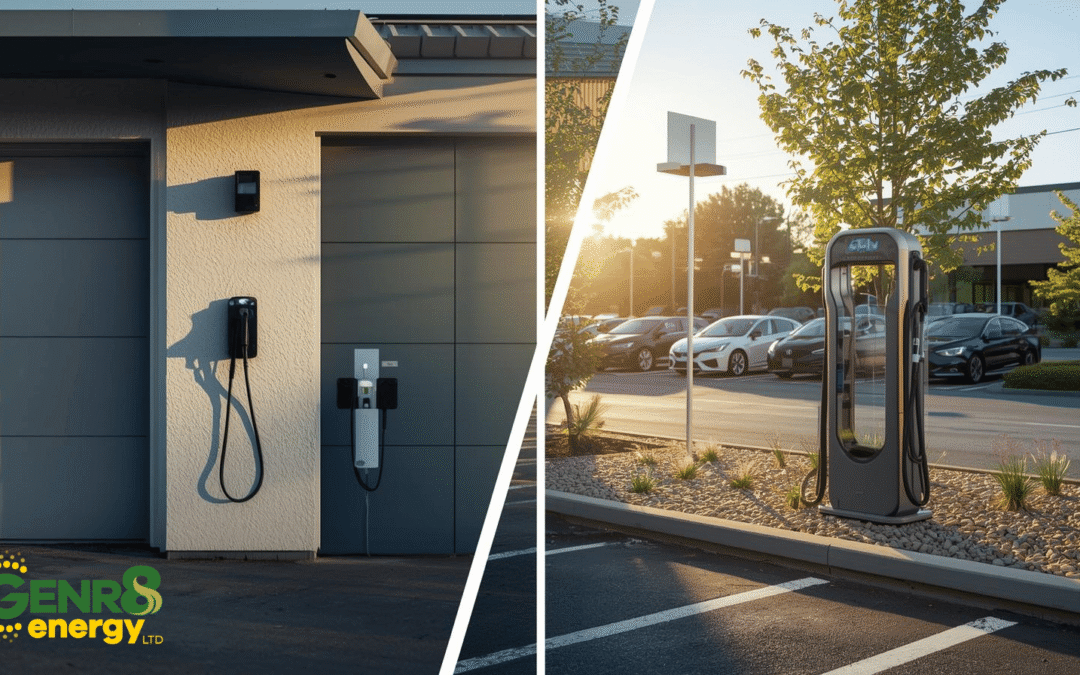
Big news for the UK’s electric future – drivers and businesses are about to get an even bigger helping hand. From 1 April 2026, government support for installing EV charging points is increasing, with grants rising from £350 to as much as £500 per socket.
This latest move is part of a broader push to make electric vehicle ownership simpler, more affordable, and more accessible nationwide. It follows closely on the heels of plans to ease installation rules for home chargers – removing yet another hurdle for those ready to make the switch.
Why this is a game-changer
Switching to electric has never looked more appealing. By increasing this EV charging rebate, the government is tackling one of the biggest sticking points for would-be EV drivers, which is the upfront cost and hassle of installing charging infrastructure.
This is especially important for people without driveways or those living in flats or rented homes, where installation can be more complex. With more financial support available, getting set up at home becomes far more achievable – and far less daunting.
And once you’re up and running, the savings speak for themselves. Charging at home is often significantly cheaper than relying on public charging networks, helping to keep day-to-day running costs down.
Simpler grants, clearer choices
In a welcome shake-up, EV charging support has also been streamlined. What was once a confusing mix of eight schemes has now been simplified into five, making it easier to understand what help is available.
The updated support now includes:
- Grants for renters and flat owners
- Support for residential landlords
- Funding for households without off-street parking
- The Workplace Charging Scheme
- Charging support for schools (extended for another year, offering up to £2,000 per socket)
While some older schemes are being phased out as planned, overall funding remains steady – so support isn’t going anywhere.
Sadly this does mean that for homeowners, the EV charger rebate scheme no longer extends to people in this bracket, but more specifically it does include those renting, in flats, on-street parking solutions and landlords.
EV Salary Sacrifice Scheme
Alongside easier access to chargers, the UK’s EV Salary Sacrifice Scheme means that employers can help employees access EV’s for a fraction of the cost and make huge savings too. Since the recent fuel price surge we have seen a huge increase in demand for EV chargers as more people explore EV’s and reducing their daily commuting costs. Ask if your employer offers an EV salary sacrifice option, and if not why not suggest the explore it? It comes at no cost to them and offers a serious benefit for you and others.
Supporting your switch – locally and reliably
At GENR8 Energy LTD, we’ve already helped homeowners, landlords and businesses across Northamptonshire make the move to cleaner energy with confidence. EV cars and home charging can offer a huge discount on increasing fuel costs, and combined with solar power and a home battery, you can reduce you home costs as well as your fuel costs to almost nothing. If you are in your home for the next 5 years, doing this all together makes a huge amount of sense so you can make immense savings right now. Financing your solar through personal loans or subscription based payments mean you don’t have to pay upfront too. Commercial solar is even easier and has even bigger opportunities for savings.
Whether it’s a straightforward home charger install or a more complex workplace setup, our team provides honest advice, high-quality workmanship and ongoing support, so you’re never left figuring things out on your own.
A boost for businesses and fleets
For businesses, this is a prime opportunity to accelerate electrification. The Enhanced Workplace Charging Scheme funding makes it more cost-effective to install chargers for company fleets, employees, and visitors alike.
by Emily Fedorowycz | Feb 19, 2026 | Uncategorized
Solar panel efficiency is a key factor for anyone considering a renewable energy system. Whether you are a business looking to cut rising operational costs or a homeowner wanting greater energy independence, efficiency determines how much power you can generate from the daylight available. It also affects how many panels you need, how much energy you will produce over time, and the overall return on investment.
This expert guide explains solar panel efficiency in clear terms and compares it with other renewable and fossil fuel options, helping both commercial and domestic customers make informed decisions.
What Solar Panel Efficiency Means
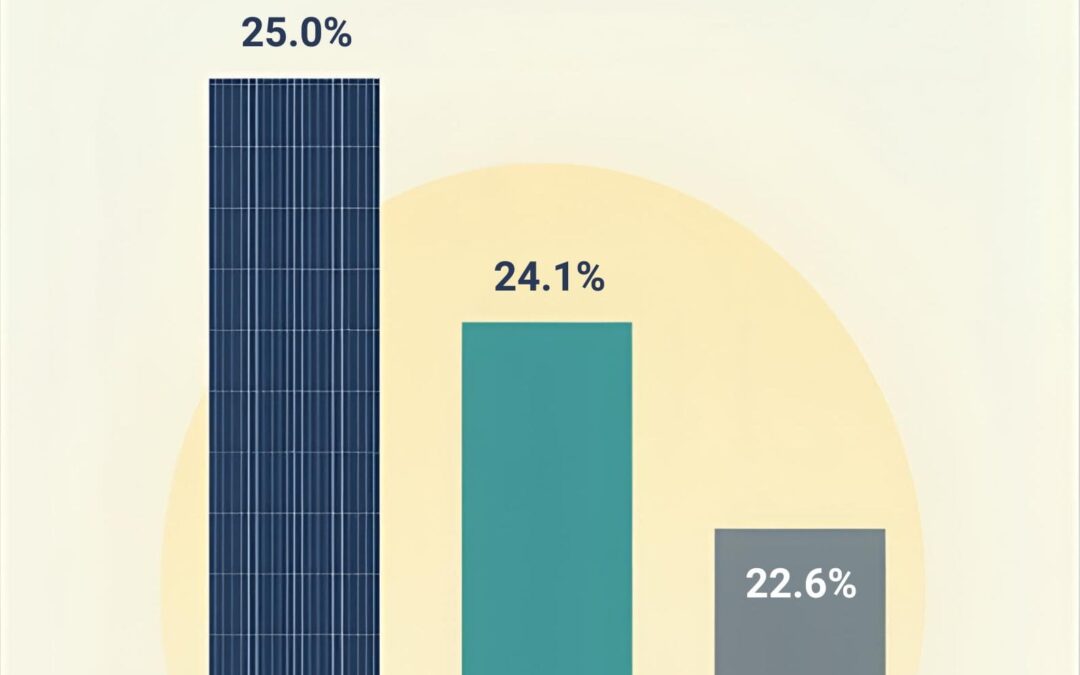
Solar panel efficiency is the percentage of sunlight that a panel converts into usable electrical power. Modern panels typically deliver around 19 to 23 percent efficiency, with premium models reaching higher levels.
Higher efficiency means:
-
more electricity from the same amount of roof space
-
fewer panels needed to meet your energy requirements
-
better performance throughout the year, especially in the UK climate
What Influences Efficiency in Commercial and Domestic Installations
Panel Type
-
Monocrystalline panels provide the highest efficiency and longest lifespan
-
Polycrystalline panels offer lower efficiency but remain reliable
-
Thin-film panels suit specialist applications where flexibility or weight matters more than output
Roof or Site Conditions
Both homes and commercial buildings benefit from:
-
a south-facing orientation where possible
-
an optimal tilt angle to capture year-round sunlight
-
good airflow to reduce heat build-up
-
minimal shading from trees, chimneys, plant equipment or neighbouring structures
Temperature and Ventilation
Panels perform best in cooler conditions. Roofs with good airflow beneath the modules can improve performance, particularly on industrial buildings with large flat roofs. This actually means that a British climate is a very good climate for solar, as the cooler year round temperatures help with efficiency.
System Design and Inverters
High-efficiency panels work best when paired with the right inverter type. For complex roofs or shaded sections, micro-inverters or optimisers can protect performance.
Degradation Over Time
Premium panels degrade more slowly, maintaining a higher proportion of their output long-term.
Solar Efficiency Compared with Other Renewables
Understanding how solar compares with other renewable technologies gives valuable context.
Solar vs Wind
-
Wind turbines convert around 35 to 50 percent of wind energy
-
Solar offers much easier installation for both homes and businesses
-
Wind requires high, stable wind speeds and is rarely suitable for domestic use
Solar vs Hydropower
-
Hydropower reaches efficiency levels above 90 percent but requires specific geographical features and major infrastructure
-
Solar works almost anywhere with daylight, making it far more accessible
Solar vs Heat Pumps
-
Heat pumps achieve a COP of 3 to 4, producing several units of heat for every unit of electricity
-
Solar and heat pumps are highly complementary for both homes and commercial sites
Solar vs Biomass
-
Biomass boilers offer strong thermal efficiency but need ongoing fuel deliveries and storage
-
Solar produces clean power without fuel, transport, or emissions
Solar Compared with Fossil Fuels
It is useful to compare solar efficiency with fossil fuel generation, although the comparison is not like-for-like
Natural Gas
Coal
-
Coal plants convert only about a third of fuel into electricity
-
They have very high carbon and particulate emissions, whereas solar has none in operation
Diesel Generators
-
Small generators run at around 30 to 40 percent efficiency
-
They are costly, polluting, and best suited to temporary use
Key point: Solar has no fuel cost and no emissions. Efficiency reflects how well daylight is converted into clean electricity, not how well fuel is burned.
How to Maximise Efficiency in Any Setting
Choose high-quality panels
Better materials and advanced cell design produce stronger long-term performance.
Ensure a well-designed layout
Correct spacing, tilt, inverter pairing and cable run design all improve output.
Address shading issues
Optimisers or micro-inverters prevent shaded areas from dragging down the whole system.
Monitor and maintain the system
Occasional cleaning, system checks and remote monitoring help maintain peak performance.
Consider battery storage
Batteries increase the value of the electricity your panels generate by allowing you to store and use energy that would otherwise be sent to the grid.
The Future of Solar Efficiency
Advances in N-type, heterojunction, tandem and perovskite-silicon technologies continue to push efficiency boundaries. With each generation of innovation, both commercial and domestic users benefit from:
-
more power from the same footprint,
-
longer-lasting systems,
-
better low-light performance,
-
stronger financial returns.
What’s in it for me? Why Efficiency Matters for Homeowners and Businesses
Solar panel efficiency affects:
-
the total output you can achieve,
-
the payback period of your system,
-
the long-term financial return,
-
your carbon reduction impact,
-
how much of your own energy you can generate on-site.
Given this, efficiency of your panels and looking for high-efficiency options means you can get the most out of your roof. The efficiency of the panels we use is typically between 21.5% and 22.8% and we attend the Solar and Battery LIVE Expo every year to ensure we stay up to date with the latest technology.
Call to Action
If you want to maximise your energy production, reduce your bills and get a system designed for long-term performance, GENR8 Energy can help.
Get in touch for an expert assessment tailored to your home or your business.