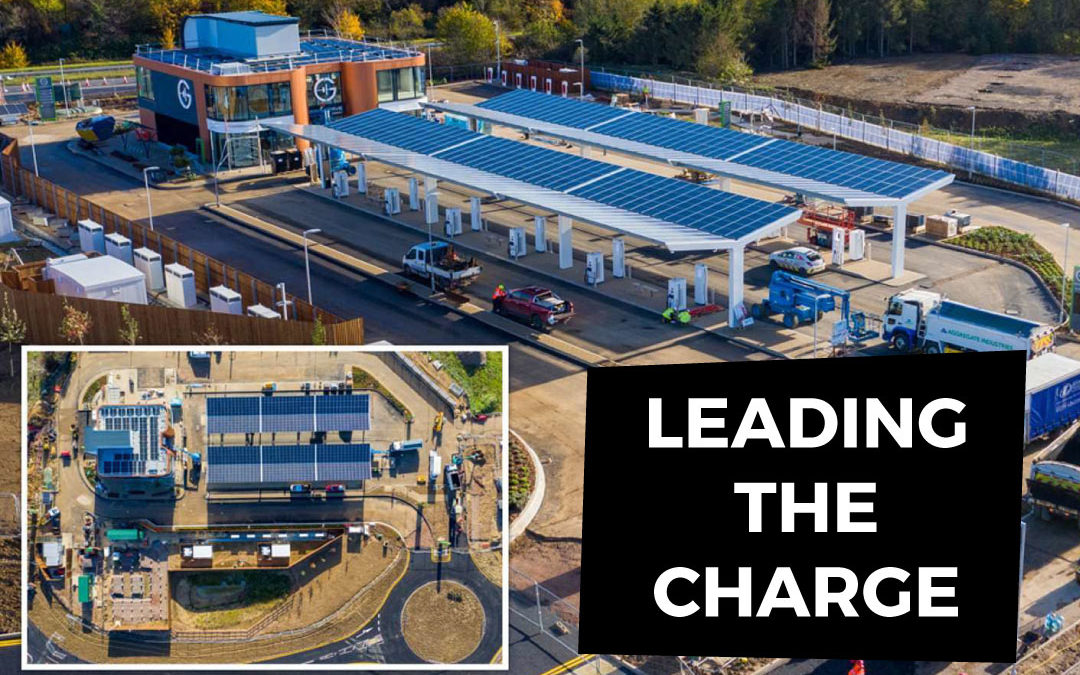
The station in Braintree, Essex, is the first of a £1billion nationwide network of 100 electric forecourts planned over the next five years.
The 2½-acre site has been built with 24 charging points which can replenish the batteries of the latest plug-in models in around 20 to 30 minutes.
There are also six ‘superchargers’ for Tesla vehicles. WHSmith, Costa Coffee and Post Office shops have been built on the site, which is powered by solar energy and battery storage.
Support will be provided by electric vehicle experts from the AA.
Gridserve, the company behind the project, says it wants to make electric vehicle charging as simple as stopping at a petrol stations.
It is planning to build 100 electric forecourts on some of the country’s busiest roads over the next 5 years. The next two are planned for Norwich and Uckfield in East Sussex.
The project has been backed by the Government, which plans to ban sales of new petrol, diesel and hybrid cars by 2035, but this could be brought forward to 2030.
Industry leaders have warned the target is overly ambitious. The Society of Motor Manufacturers and Traders says £17billion of investment is needed to get a charging network ready for the mass electric vehicle market, with more than 500 new charge points needed every day until 2035.
It is calling for tax relief for zero-emission vehicles and a long-term commitment to ‘plug-in grants’ which would reduce the cost of electric cars.
This funding would reduce the price of an electric family car by an average of £5,500, helping to drive 2.4million sales in greener vehicles over the next five years, the organisation said.
Prices for a standard-sized electric car start at about £15,000.
Gridserve founder Toddington Harper said the forecourts ‘will eliminate range and charging anxiety by making it easier and cheaper to charge an electric vehicle than to fuel a petrol or diesel alternative.
‘The UK’s first electric forecourt represents so much more than an electric equivalent of a modern petrol station – it will deliver a fully loaded customer experience, offering the best of British retail and customer service.’
Goldman Sachs says renewable-energy spending will surpass oil and gas for the first time ever in 2021 — and sees total investment spiking to $16 trillion over the next decade
The transition to renewable power from traditional fuels will create a $16 trillion investment opportunity through 2030 as spending shifts to new infrastructure, Goldman Sachs analysts said Tuesday.
The bank projects green-energy spending to pass that of oil and gas for the first time ever next year and account for roughly 25% of all energy spending. The share stood at just 15% in 2014, but a dive in fossil-fuel investing over the past decade shifted more dollars to clean energy initiatives.
If the nation aims to hold global warming within 2 degrees Celsius, the move toward renewable energy would create between $1 trillion and $2 trillion in yearly infrastructure spending, the team led by Michele Della Vigna wrote in a note to clients.
Economic downturns have historically slowed efforts to boost clean energy investing, but Goldman sees the coronavirus downturn bucking that trend and accelerating the nationwide pivot.
“We believe this time will be different, especially for technologies that are now mature enough to be deployed at scale and can benefit from a falling cost of capital and an attractive regulatory framework, unlocking one of the largest infrastructure investment opportunities in history on our estimates,” the team wrote.
The decade-long strategy isn’t without its risks. Goldman warned that low cost of capital and an attractive regulatory framework are “essential” to moving green infrastructure forward. Such projects can be as much as three-times more demanding of capital and jobs compared to traditional energy developments.If either side of the public-private collaboration falters, the transition will slow dramatically, the bank said.
Two-speed de-carbonization also poses a threat to the firm’s outlook. Fiscal and monetary aid will likely boost mainstream clean-energy initiatives like solar and wind power. Yet growing technologies like clean hydrogen and the creation of carbon markets risk being placed on the back-burner.
If the latter efforts can’t gain access to sufficient capital, the long-term plan to slash carbon emissions will stall, Goldman warned.
“This may ultimately delay the technological breakthroughs necessary to flatten the de-carbonization cost curve and achieve cost-efficient net zero carbon,” the team wrote.
Riding a prototype electric Harley-Davidson LiveWire through the Calchaquí Valley in northwest Argentina, the actor and avid motorcyclist Ewan McGregor waxes poetic into a microphone inside his helmet.
“I just love seeing Mother Nature like this, watching the land change as we go by. It’s really touching me, and what I was looking for in terms of feeling closer to the world, the Earth, appreciating the beauty of it as we ride along.”
Apparently, after completing two epic motorbike adventures, the two felt they needed an additional challenge. They decided the “Long Way Up” would be an electric voyage — a way to see the world without aiding its decay.
That meant electric bikes (Harley-Davidson supplied prototypes) that could withstand myriad environments — snow, ice, altitude, wind, rain — and very few charging stations.
The “Long Way Up” production crew hooked up with an electric SUV startup, Rivian, to supply new prototype pickup trucks — designed to take on every terrain. Rivian also installed charging stations along the more desolate parts of the route.
The trip, well-planned as it was, does not get off to an easy start, owing to unseasonably cold weather (it was the worst winter in since 1994 this time last year), as well as the trial of using vehicles that had yet to be tested in such conditions. But once they start to put real mileage between themselves and Ushuaia, a relatively predictable rhythm sets in that propels the journey forward with fewer headaches and anxieties. And that’s when the real magic begins. The scenery is breathtaking, and while the relationship between McGregor and Boorman is the predominant one, seeing how this group navigates the trip, together and separately, is also powerful stuff.
In the end, after three months on the road, both men were ready to end the trip, though Boorman says, “You always talk about the possibility of another one, so you’ve got that in your head, so it’s not so bad that this one’s finished.
“There’s an arc, these trips that we’ve done,” says McGregor. “You’re sort of ready for it to end. It comes to its conclusion.” And because the “Long Way Up” route terminates in Los Angeles, where McGregor lives, his 13,000 mile journey ended on his own driveway.
“I rode all the way to my front door from Ushuaia — it was a pleasure, that.”
RenewableUK has launched a new guide on energy storage, “Electricity Storage: The Cornerstone of the UK’s Future Energy System” published by Haynes as part of its world-famous series of manuals. The publication is sponsored by RenewableUK, RCG (Renewables Consulting Group) and Siemens Energy.
The manual sets out the wide range of storage technologies now being developed such as renewable hydrogen made from electricity generated by offshore wind farms, which can be used for heating and transport; two sectors which have so far been slow to decarbonise.
Increasing electrification in transport and heating this decade means that demand for clean power will surge in the years ahead, so increasing our ability to store electricity using a variety of technologies is an essential part of the UK’s future energy system.
The widespread growth of EVs, for example, offers opportunities for the lithium-ion batteries that power these cars to make the grid more flexible and save consumers money by storing power.
The manual also explores cutting-edge projects such as the Siemens Green Ammonia Demonstrator. This uses electrolysis, powered by renewable energy, to produce ammonia to be used as a fuel. When this is burned, it turns back into nitrogen and water – without creating any CO2 emissions.
Solar is now the fourth-largest source of power-generation capacity worldwide, having overtaken wind, according to BloombergNEF.
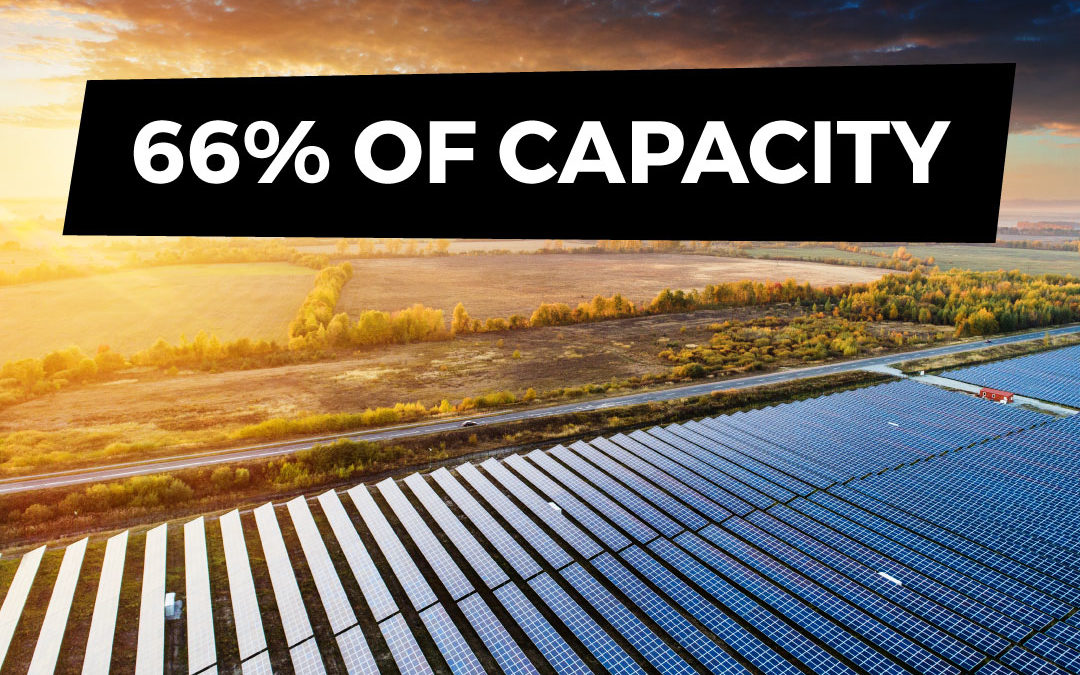
Solar accounted for nearly half of all new power generation capacity added worldwide in 2019, surpassing wind as the fourth-largest source of capacity on a cumulative basis, according to newly released data from Bloomberg New Energy Finance.
“PV is now truly ubiquitous,” said Luiza Demôro, a BNEF analyst and the lead author of the study, in a statement on the research.
The amount of worldwide generating capacity run on the sun now ranks behind just coal, gas and hydroelectric power. Combined, solar and wind accounted for more than two-thirds of new global capacity additions last year. BNEF’s research highlights the changes taking place across an electricity industry increasingly focused on wind and solar. But it also underscores the difficulty in converting a fossil-fueled system to one that is reliant on increasing quantities of renewables. Though countries are adding solar at a faster clip, the lower capacity factor of that resource means the total amount of electricity that solar generates is still a drop in the bucket, totaling just 2.7 percent of worldwide electricity. That’s up from less than 0.2 percent in 2010, but it’s still much lower than is needed to achieve the decarbonized economy necessary to combat global climate change. Though the coal industry has taken a hit in the U.S. — coal-fired electricity fell to a four-decade low in 2019, according to the U.S. Energy Information Administration — it’s still proliferating worldwide. Global coal capacity now tops 2 terawatts, and emerging markets added nearly 700 gigawatts in the last decade. Yet even as coal capacity is increasing, coal-fired electricity fell last year. Less runtime for existing plants means coal-fired plants spent less time online in 2019 than in the year prior. Coal utilization dropped 7 percent from 2010 to 2019. Last year, gas build-out also dropped to its lowest level of growth in 10 years. The great majority of renewables additions are concentrated in just a handful of countries. China, India, the U.S. and Japan dominate in solar additions, while China, the U.S., Germany and the U.K. do so for wind.
Despite the contradictory trends, the shift toward solar and wind is nothing short of a “clean energy revolution,” according to BloombergNEF analysts.
With overall global electricity use on the rise, renewables additions have thus far been unable to significantly and consistently offset expanding emissions. In 2019, electricity-related carbon dioxide emissions dropped 1.5 percent from the year prior, which BloombergNEF attributes mostly to lower levels of coal generation. Then 2020 arrived. BloombergNEF analysts expect the coronavirus pandemic to drive emissions lower than they were in 2019, due to contracting economies and unsustainable drops in electricity demand. When the world begins returning to some state of normalcy — whenever that may be — expect emissions to largely do the same in the absence of structural changes.