by Jaime | Jul 9, 2020 | Government
As part of the Green Homes Grant scheme Chancellor Rishi Sunak outlined plans which will see the Government put aside £2 billion for green home upgrades, as part of his economic statement on Wednesday.
Vouchers worth up to £5,000 will be issued to homeowners in England to make their homes more energy efficient under a new Government scheme that launches in September. We don’t yet have full details about how the new scheme will work though – see what we know so far below. Eligible homeowners will be able to use the vouchers to help pay for environmentally friendly improvements such as installing loft, floor and wall insulation or double-glazing, and possibly micro generation options.
How will the Green Homes Grant work?
The idea is that the Government will give homeowners in England vouchers towards the cost of energy efficient improvements, which should cover much – and in some cases all – of the cost. You’ll have to apply for a voucher once the scheme is up and running in September. You’ll then be able to spend it to improve your home.
The aim of the scheme is to help homeowners and promote energy efficiency, but also to help boost the economy during the coronavirus pandemic by creating jobs.
What will the vouchers cover?
The vouchers will cover energy efficient home improvements. Examples the Government has given include loft, floor and wall insulation, and double-glazing. However, it hasn’t yet given a complete list, so other improvements may also be covered. We’ll update this story when we have full info.
How much will the vouchers be worth?
For most homeowners, the vouchers will be worth about two-thirds of the cost of the energy efficient improvements, up to a maximum of £5,000 per household. For example, the Treasury says a homeowner installing cavity wall and floor insulation costing £4,000 would only pay about £1,320, with the Government contributing the remaining £2,680 through the voucher scheme.
But those on low incomes will be able to get more – in that case the Government will cover the full cost of the energy efficient improvements, so you won’t have to pay anything, and the vouchers could be worth up to £10,000 per household.
Of course, green improvements such as insulation can also help cut your energy bills, with the Government saying families could be able to save hundreds of pounds a year as a result.
This is a big unknown – the Treasury told us it doesn’t yet have further details about what the full eligibility criteria for the scheme are, so we simply don’t know. We’ll continue to follow this closely and will update this story when we know more.
The Treasury has said it hopes the scheme will help pay for improvements in over 600,000 homes across England though – so the vouchers should be fairly widely available.
The boosted £10,000 vouchers, where households won’t need to pay anything towards improvement costs, will be for those on the lowest incomes – but again, we don’t know what the threshold or exact eligibility criteria are at the moment. We’ll update this story with more details when we have them.
How can I apply for a voucher?
The scheme is set to be launched at some point in September, and homeowners will be able to apply online at this point.
Homeowners will be shown energy efficiency measures which the vouchers can be used for, and recommended accredited suppliers. Once a supplier has provided a quote and the work has been approved, a voucher will be issued. The Government hasn’t said how long it could take for an application to be approved and a voucher issued, however.
We’ll update with more details of the application process once they’re available.
by Jaime | Jun 7, 2020 | Projects, Solar
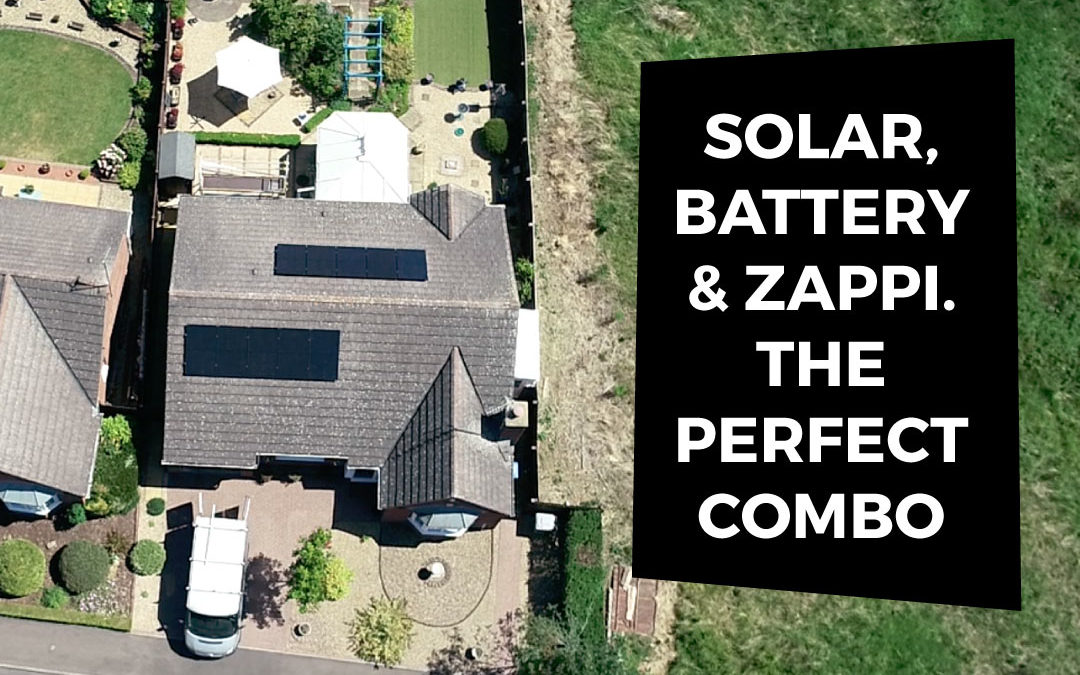
Not only was the weather glorious for this install but the customer had a 3.5kW solar array alongside a 4.5kWh battery and Zappi charger for their BMW i3 electric car, and can now charge their EV from their PV for free…vee.
During the summer months they’ll be able to save enough energy in their battery to power their house and have enough left to charge their car during the day, meaning their bills for much of the year will be an absolute minimum. This is what the customer had to say…
“The great lads from Genr8energy installed 10 PV solar panels for me and it immediately reduced my energy bill by 95%. Plus I have the battery tucked away in my garage so I can use solar energy after sunset. They’re also fitting a fast charging Zappi EV charger for me so my new car will be run by the sun. With no road tax to pay I’ll be quids in.”
This was the end result…
by Jaime | May 19, 2020 | Energy, Solar, Wind
Onshore wind is now the leading renewable energy technology in the U.S., and it’s still knocking competitors out of the way. Last year wind overtook hydropower in total generation, and 2020 is on track to be a record year for new wind farm construction.
But all other energy sources are losing ground to solar these days, wind included. Solar accounted for 40 percent of new U.S. generation capacity in 2019, its largest share in history. After 2020, solar’s lead over wind will widen rapidly in the U.S. market, Wood Mackenzie forecasts.
Large-scale solar is already cost-competitive with wind in many states, and analysts believe solar has an easier path toward further cost reductions. In Texas, home to nearly one-third of the country’s 100 gigawatts of wind capacity, there’s now more solar than wind in the interconnection queue.
Falling costs, steady efficiency gains and federal incentives have thrust solar to the center of the strategic plans of many American energy companies. Unsurprisingly, a significant number of the country’s wind energy giants are turning their attention to solar.
There are key differences between wind and solar development, but much of the necessary expertise is translatable. Solar projects can often be sited closer to population centers and rely less frequently on tough-to-build transmission lines. The U.S. is on track to install nearly 15 gigawatts of wind farms this year, a new record, according to Wood Mackenzie data. But the market is expected to decline considerably through the mid-2020s; by 2025 the annual solar market could be several times as large as its wind counterpart.
There will still be some wind-only developers, but others will need to move toward solar “if they want to survive,” said Colin Smith, senior solar analyst at Wood Mackenzie. “There are absolutely going to be losers” as the market pivots, he said.
As the renewables market gets ready for this reshuffle, GTM has highlighted five major wind developers that are betting a big chunk of their future on solar.
EDF Renewables
France’s EDF started out in the wind business in the 1980s, entering the U.S. market in 2002 through the acquisition of enXco. But for more than a decade, the company has been watching closely as the cost of solar energy fell, said Ryan Pfaff, executive vice president of grid-scale power at California-based EDF Renewables North America.
In 2015, the company devised a five-year plan to move toward a more balanced portfolio. “You could see solar start to emerge as being more competitive and attractive to offtakers,” said Pfaff. “We want to supply the product that customers want. What many of them are looking for is the most competitively priced renewable megawatt-hour that we can provide to them.”
EDF’s development pipeline now skews toward solar; the company is targeting around 1.4 gigawatts of annual capacity additions in North America from 2021-2023, and 80 percent of those projects will be solar — many with batteries attached.
EDF has no plans to cut wind from its portfolio. Through a joint venture with Shell New Energies known as Atlantic Shores, the company co-owns an offshore wind zone facing New Jersey that could hold 2.5 gigawatts. Wind can balance solar’s output and will remain competitively priced in many markets, especially where solar is already abundant, Pfaff said.
How EDF’s resource mix looks beyond the mid-2020s will partially be left to how incentives shake out, Pfaff said. Though solar is now more economic than wind in many states, the recent extension of the federal Production Tax Credit for wind may boost that technology after the solar Investment Tax Credit dissolves.
“We see ourselves being active in wind all throughout the 2020s in the U.S.,” said Pfaff. “In terms of how the market size for onshore wind will evolve, it’s too early to tell beyond 2024, but we see light through the end of 2024 based on the tax credit extension.”
NextEra Energy
NextEra has long been the U.S. wind market’s leader. It owns more wind capacity than any other American company by a wide margin, and it once again ranked as the market’s leading developer of new projects in 2019.
These days, however, NextEra is nearly as formidable on the solar side — and solar may soon eclipse wind in terms of the new projects the company brings online.
NextEra’s installed solar fleet now totals more than 4 gigawatts, the largest outside of China, according to WoodMac. Last year the company pledged to invest in 30 million solar panels by 2030 — more than 10 gigawatts — to serve customers of its subsidiary utility Florida Power & Light.
“This plan reflects our belief that renewable generation, and particularly solar paired with battery storage in Florida, is an increasingly cost-effective form of generation in most parts of the U.S.,” CFO Rebecca Kujawa said on the company’s recent earnings call.
For 2021-2022, NextEra Energy Resources has already signed nearly 3 gigawatts of solar contracts, and that could grow to 4.8 gigawatts. By comparison, the company expects wind deals amounting to 2 gigawatts to 3.8 gigawatts during that same period.
The developer is eyeing ways to add batteries to its existing solar projects and plans to spend $1 billion on energy storage projects in 2021.
NextEra increasingly views storage “as an important standalone business in its own right,” says CEO James Robo.
Invenergy
Two weeks ago, Invenergy, long a wind-development powerhouse, started operations at its largest-ever solar project, the 160-megawatt Southern Oak array in Georgia.
The Chicago-based developer has started throwing its weight around in national solar policy struggles. After the Trump administration withdrew an exclusion on import tariffs for bifacial solar panels, Invenergy sued and won a ruling that allowed the exclusion to resume for a time. (Southern Oak is the second Invenergy solar project to use bifacial modules.)
Ted Romaine, senior vice president of origination, says Invenergy has been looking at solar since 2011 or 2012, when customers started demanding it. The company played an early role helping to catalyze Ontario’s solar market.
Meanwhile, the company is also pushing ahead with its traditionally preferred resource, including a 380-megawatt wind project in New York and a 500-megawatt project in Wyoming.
Invenergy was an early investor in Ontario’s solar market. (Credit: Invenergy)
“Wind definitely has a place in the future,” said Romaine. “We view wind and solar as complementary to each other.” How the mix plays out for Invenergy will depend on state and federal incentives as well as geography, permitting and customer demand, he said.
Avangrid
Avangrid, a utility and renewables developer majority-owned by Spanish wind giant Iberdrola, was a pioneer in the U.S. wind market (it was known as Iberdrola Renewables until 2017).
Onshore wind accounts for 87 percent of Avangrid’s installed capacity today, and the company has staked out an early lead in the U.S. offshore wind market through its part in the 800-megawatt Vineyard Wind project off the coast of Massachusetts.
Compared to some of its closest rivals, Avangrid has been slower off the mark when it comes to solar: Though it is the country’s third-largest wind operator, Avangrid owns just 130 megawatts of solar in the U.S. today.
But things are changing quickly. Avangrid is slated to complete 670 megawatts of solar projects this year and next. And the company tells GTM its pipeline of future solar projects now stands at 8.4 gigawatts, nearly as large as its on- and offshore pipelines wind put together.
“Demand for solar from utilities, municipalities, and commercial and industrial energy customers has grown significantly in recent years as the economics of the technology have become increasingly favorable,” spokesperson Morgan Pitts said.
Looking ahead, storage will be combined with “nearly all” solar requests for proposals. “There isn’t tension between any of the above technologies,” said Pitts. “Each makes sense for different customers in different geographies.”
Avangrid’s solar ambitions are mirrored by those of its parent company. Iberdrola finished Europe’s largest solar plant in January, part of a bigger plan to build 3 gigawatts of solar in Spain by 2022.
Ørsted
Denmark’s Ørsted is virtually synonymous with offshore wind: The company is that technology’s largest developer and operator globally, and that’s also true in the burgeoning U.S. market.
Ørsted began expressing interest in other renewables markets a few years ago, and it acted on that interest through the acquisitions of U.S. developers Lincoln Clean Energy in 2018 and Coronal Energy in 2019, the latter of which focuses on solar and storage.
Last November Ørsted announced a 460-megawatt solar-plus-storage project in Texas’ Permian Basin. The company said the project, due online in 2021, will make it the first in the U.S. to own the “full spectrum” of renewable technologies — onshore and offshore wind, solar PV and storage. (After all, there’s only one U.S. offshore wind farm in operation today, and Ørsted owns it.)
But it will not be the last developer to run the gamut. Dominion Energy is about to finish a 12-megawatt offshore wind pilot and plans to finish four battery storage pilots in early 2021. Before long, others will be banging on the door of the “full spectrum” renewables club.
by Jaime | Apr 22, 2020 | Energy, Solar
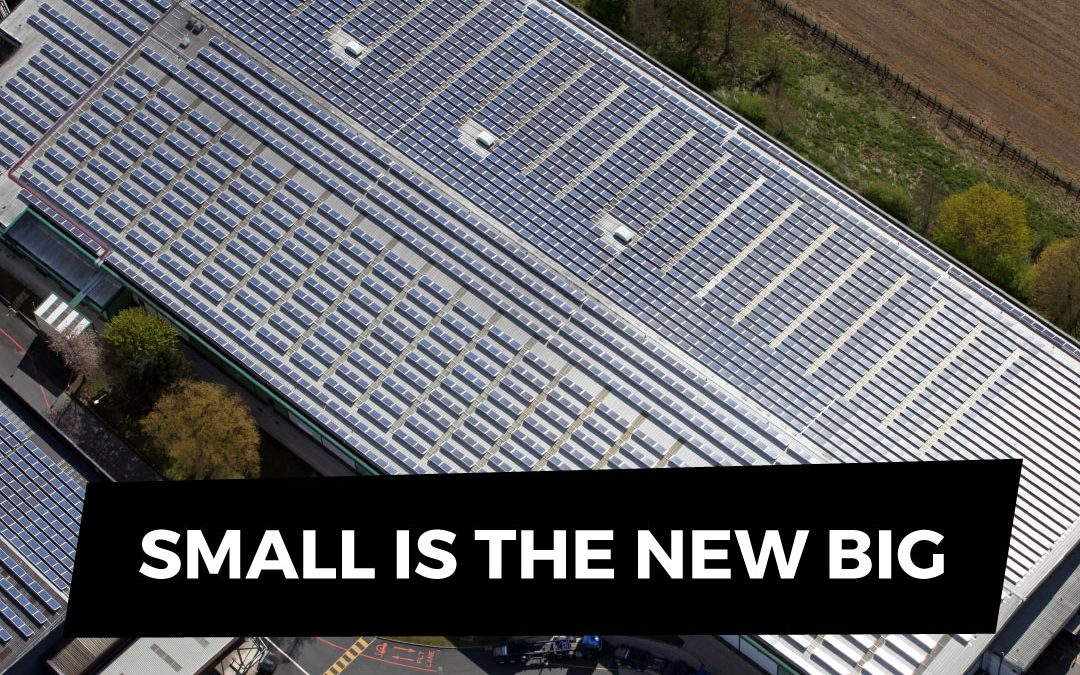
The world’s leading nuclear power generator is betting big on a future of small-scale, distributed energy.
Électricité de France operates 57 nuclear reactors in its home country and owns stakes in several U.S. nuclear plants that it’s now moving to sell. But EDF’s biggest stamp on the American power market has come in large-scale renewables: Its San Diego-based EDF Renewables North America subsidiary has developed and now operates gigawatts of wind and solar farms across the country.
Now, EDF Renewables is trying to replicate that success on a much smaller scale. How it fares in the distributed space will be of great interest to other 20th-century energy giants feeling their way toward a transformed, low-carbon future.
Over the past few years, and largely through acquisitions, EDF Renewables has amassed one of the most comprehensive U.S. distributed energy businesses, covering solar, energy storage, microgrids and electric vehicle chargers.
First came groSolar, a Maryland-based developer of small ground-mount systems. Then came a 50 percent acquisition of EnterSolar, one of the country’s leading installers for commercial and industrial customers. Most recently it bought PowerFlex Systems, a California startup that builds smart EV charging facilities.
The EDF Group has made similar acquisitions in other countries, including its February purchase of a majority stake in U.K.-based Pod Point, its largest investment in the EV market yet.
The coronavirus crisis may open the door to more dealmaking, said Raphael Declercq, who runs the Distributed Solutions unit at EDF Renewables North America. “There will be some casualties in our sector: Assets seemed overpriced up to a month ago; that may change and we may be able to grow through acquisitions,” Declercq told GTM.
Small projects are often more profitable than large ones, says EDF Renewables’ Raphael Declercq.
Several European energy giants have been on a recent shopping spree for distributed energy companies in the startup-rich U.S. — notably Shell, EDF, Engie and Enel. Without their own U.S.-based utilities to worry about taking business from, they can roll up fleets of behind-the-meter energy assets and deliver power to customers in new ways, while learning lessons that can be applied in other markets.
“It’s a grab game right now, getting as much of that value chain as possible,” said Elta Kolo, content lead for grid edge research at Wood Mackenzie. “In a way, you’re almost seeing a new type of utility emerging in the market,” she said.
It’s a hazardous moment for the energy industry, oil companies and utilities alike. State-controlled EDF last week pulled its financial guidance for 2020 and 2021, saying it expects a sharp drop in its French nuclear output this year as the coronavirus outbreak depresses power demand.
Distributed energy is no easy business, with plenty of failed companies and ahead-of-their-time ideas. EDF itself has had setbacks in the sector: A deal struck in 2017 to build a portfolio of battery systems for PG&E fell apart when the California utility filed for bankruptcy, Declercq said in an interview.
Still, Distributed Solutions is booking solid profits for its parent, he said. The unit installed 100 megawatts of capacity in 2019, its largest tally yet, and is on its way to doubling that on an annual basis over the next couple of years — the kind of numbers even a successful large-scale developer can appreciate.
The rising importance of corporate renewables
As the U.S. renewables market scaled up, it did so largely along two separate tracks: There are big wind and solar farms (150 gigawatts of them now); and there are small, distributed systems, often located at homes and businesses.
Surprisingly few are the companies pursuing both tracks simultaneously; if anything, their ranks have thinned as renewables markets became more specialized. SunPower, as one example, used to build both large and distributed projects, but walked away from the utility-scale solar market a few years ago.
When EDF started building distributed solar systems in the U.S., they were often overshadowed by the company’s grid-scale projects, Declercq said.
“You’d go to the engineering team and tell them, ‘Hey, we really need the layout for this 1-megawatt rooftop for tomorrow.’ But when you’re competing against a 100-megawatt wind or solar farm, the engineering team is always going to give priority to the bigger ones.”
It’s not easy to organize a business capable of pursuing both tracks equally well. But EDF’s belief in the “deep” trend toward decentralized energy led it to establish its standalone Distributed Solutions unit.
A common thread runs through EDF Renewables’ businesses these days: the growing importance of corporate customers. In many markets around the world, and nowhere more so than the U.S., corporations are increasingly going around traditional utilities to buy clean power and energy services directly.
A company like EDF Renewables is in a “powerful position” as it chases corporate consumers, said WoodMac’s Kolo. “They’re going direct to C&I customers and they can bring price guarantees to the table because they have bulk power.”
EDF continues to pursue large-scale renewables, including new avenues like solar-plus-storage and offshore wind plants. Meanwhile, it can offer corporate customers a growing array of options for on-site energy systems and services. “They can use their build-out of distributed resources to balance out their own portfolio,” Kolo said.
EDF has acquired several EV charging companies recently, including PowerFlex, Pod Point and Pivot Power.
EDF recently completed a 200-megawatt Iowa wind farm for Google, and in January it switched on a 1-megawatt/4-hour battery system for the San Diego Zoo. EnterSolar counts Target, Asics and Bloomberg among its customers. PowerFlex, the newest member of the family, is “doing a lot of work right now for Intuit,” the financial software company, Declercq said.
EV chargers are a “very highly valued perk for employees at tech companies in California,” he said. Some corporate parking lots around San Francisco and Los Angeles are now a quarter filled with EVs. “It’s a great way to start a business relationship for us.”
Why the PG&E storage deal fell through
Even in California, distributed energy is no easy business, and small-scale deals can fall apart in a big way.
One of the toughest nuts to crack in the distributed energy market has been commercial storage. Several early sector leaders have survived by pivoting away from hardware and toward software and services — AMS and Stem among them.
EDF, too, has had its C&I storage setbacks. In 2017, the company won a contract to provide 10 megawatts/40 megawatt-hours of storage capacity for PG&E, to be installed at a number of C&I sites in the utility’s territory by late 2020.
It was a landmark announcement: Of the six storage contracts PG&E announced totaling 165 megawatts, only EDF’s was for an aggregated portfolio of behind-the-meter batteries. But the deal “went sideways” after PG&E’s bankruptcy in early 2019, Declercq revealed.
“PG&E looked at their contracts and the optionality they had on those when they went bankrupt, and they said, ‘Well, this one, sorry, we’re not going to proceed’ — which hurt.”
If there’s a silver lining, it’s that California’s storage market has shifted since the contract was awarded. Where once the focus was strategically discharging batteries to help companies lower their demand charges, the bigger game today is storing solar power for use during the late afternoon and early evening, Declercq said.
“We were not able to do that with the PG&E contract. We departed on good terms because the market was going in another direction.”
Where the profits come from
EDF’s open-armed approach to distributed energy means it’s unlikely to miss out on the next big market. But do any of its small-scale energy businesses make money today?
The answer is yes, Declercq said — some of them.
Distributed solar is the real moneymaker today, he said. EnterSolar is profitable. So is groSolar’s focus: building small front-of-the-meter PV arrays for municipal and co-op utilities.
Munis, coops and other smaller load-serving entities remain open to deals despite COVID-19 shutdowns, but the C&I market may take a hit, Declercq said.
The solar projects “allow us to finance some of the growth we think is coming in the other segments. If you look at the battery business, if you look at the EV business, those are [early-stage] businesses and we need to, in a way, subsidize the growth of our distributed offerings through solar in the traditional form.”
Distributed projects are often more profitable than large-scale renewables, he added. “If you look at the internal rate of return of a smaller project in isolation, it’s better than what you’re getting on a large-scale wind or solar farm.”
The challenge is keeping overhead costs down while scaling up a business that relies on a constant flow of small projects. “There’s limited public information on the profitability of our peers, but if you look at a company like SunPower, which is publicly listed, we’re doing much better.”
by Jaime | Mar 13, 2020 | Uncategorized
Oil companies have long argued that renewables projects offer lower returns. “That argument no longer holds at $35 per barrel.”
Low oil prices will test the resolve of the majors’ energy transition plans, but analysts expect the companies’ long-term commitments to decarbonization and renewable energy to remain intact. A dispute between Russia and Saudi Arabia has sent a flood of cheap oil and gas into global markets just as the COVID-19 pandemic is stifling demand. This market dislocation comes at a time when European oil majors including Shell, Total, Repsol and BP are embarking seriously down a path toward emission reductions and the diversification of their businesses into renewables, e-mobility and other energy services.
Oil companies have been notoriously slow in pivoting their businesses toward cleaner energy sources. Will the current market storm change that? Might it even accelerate the transition?
“The argument that has often been put forward is that they can’t invest in renewables because renewable projects offer much lower returns than oil and gas projects. That argument no longer holds at $35 per barrel,” Valentina Kretzschmar, director of corporate research at Wood Mackenzie, told GTM. “Average returns from oil and gas projects are now the same as renewables projects and, in fact, renewables projects are much lower risk. Already, we have seen companies like Occidental cutting dividends by 90 percent. It’s a discretionary spend,” she added.
By that same token, the current headwinds for oil companies could mean a negative impact on carbon-reduction measures that would also be considered by the industry as discretionary spending.
The oil and gas sector currently accounts for just 2 percent of investment in renewables, according to Wood Mackenzie. So a slowdown in the near term would not derail the flow of finance to solar and wind projects.
This isn’t the first time that oil prices have suffered a shock. During such “black swan” events, many types of diversification strategies are used to protect against commodity prices, said Luke Fletcher, senior analyst for investor research at the environmental reporting nonprofit Carbon Disclosure Project.
“Traditionally, the integrated companies had their ‘downstream’ to mitigate against low oil prices,” said Fletcher. Essentially, low oil prices mean the profit margin for converting that into motor oil or other products is higher.
“In the future, having exposure to other diversified energy assets, such as renewables, could provide a bit of a hedge against oil price volatility as well. They have fundamentally very different cash flow profiles and are obviously less reliant on oil and gas and other commodity prices,” Fletcher said.
While some oil companies may choose to trim capex in the energy transition in the immediate term, others may choose to signal their longer-term strategy and double-down on diversification across the broader energy sector.
As oil companies are hit hard by the price collapse, cost-cutting will dominate, and companies with weaker balance sheets will be more concerned with survival, Kretzschmar said.
Yet longer-term strategies to expand revenue streams in the power sector are not likely to be shelved.
“One thing is clear: The energy transition is not going to go away,” said Kretzschmar, pointing out that this week’s U.K. budget announcement had climate change woven throughout. “It’s still a key priority for the government.”
With that in mind, Kretzschmar warned against business as usual for oil companies.
“The sector is already very much unloved by investors, and it’s only going to get worse. I would like to see the oil and gas sectors starting to seize opportunities in the megatrend that is the energy transition. Because there are opportunities. It is a growing trend, and the pressures to transition and to tackle climate change are only going to increase.”