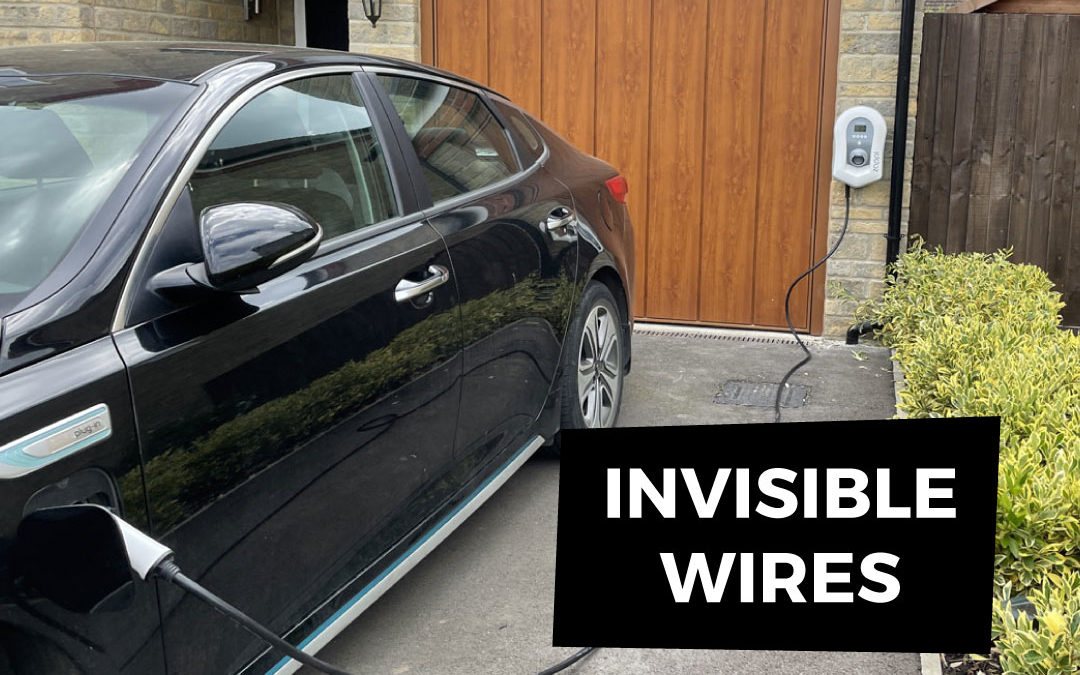
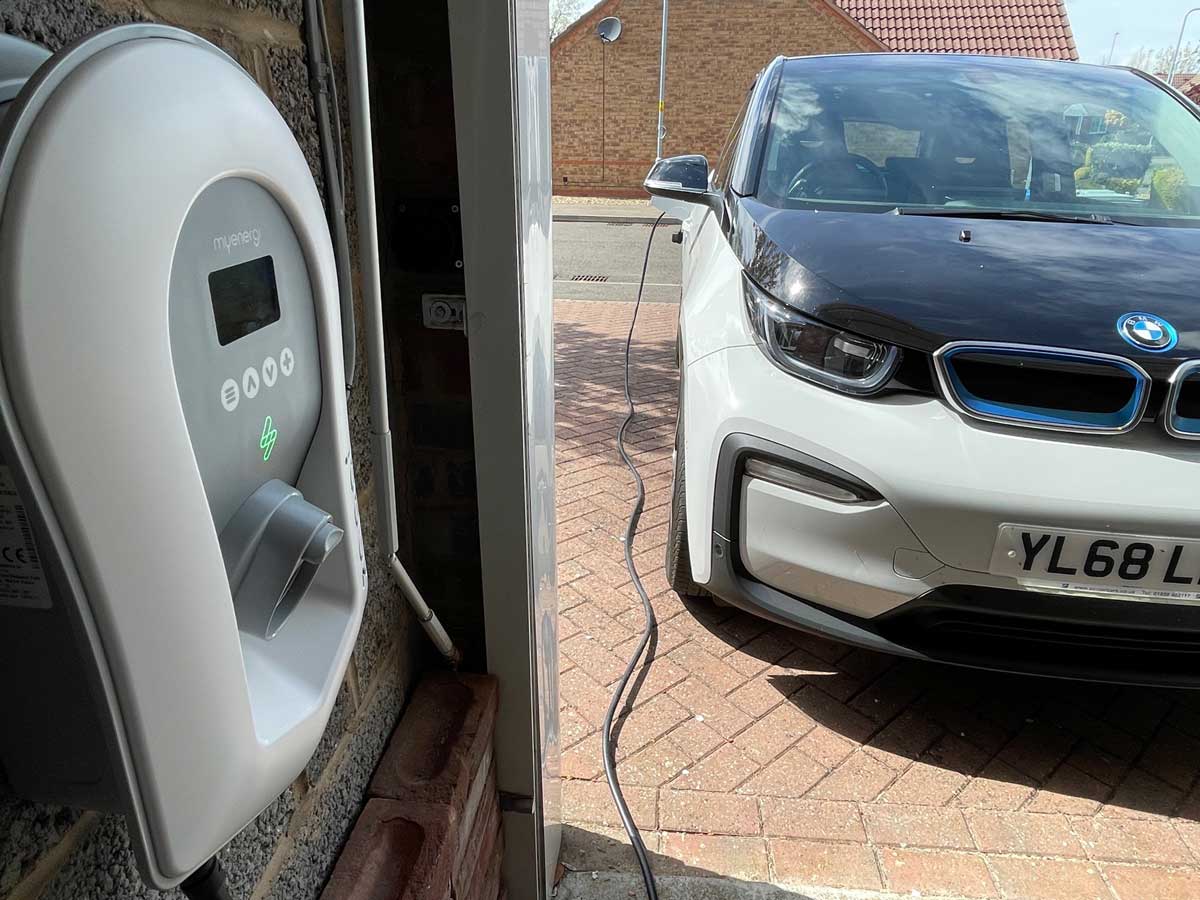
With this Zappi install we were able to bring the power supply directly through the back of the unit and hide the wiring completely. It was made a little tricky as the drainpipe was exactly where the customer wanted their charger, but we managed to move it across and they were very pleased with the result. Plus now their daily commute can be powered entirely with sunshine as their solar panels are connected to the Zappi, which is good news for everyone.
The short answer is yes, absolutely. You can charge any plug-in Electric Vehicle on solar power, and effectively fuel your car from the sun. Can you charge it all year round, probably not (unless you have a larger than average solar array) but for at least half the year you could potentially get a significant amount of range purely from solar energy, and in the summer it could give you hundreds of miles of sun-powered driving per month.
One of the few positives to come from 2020 is that many more people will be working from home, so not only will they be travelling fewer miles, but can leave their EVs plugged in during the day when most of their excess power is produced. This means that instead of sending your extra energy back into the grid it can go into your fuel tank instead, because generally your car is going to be stationary for most of the day.
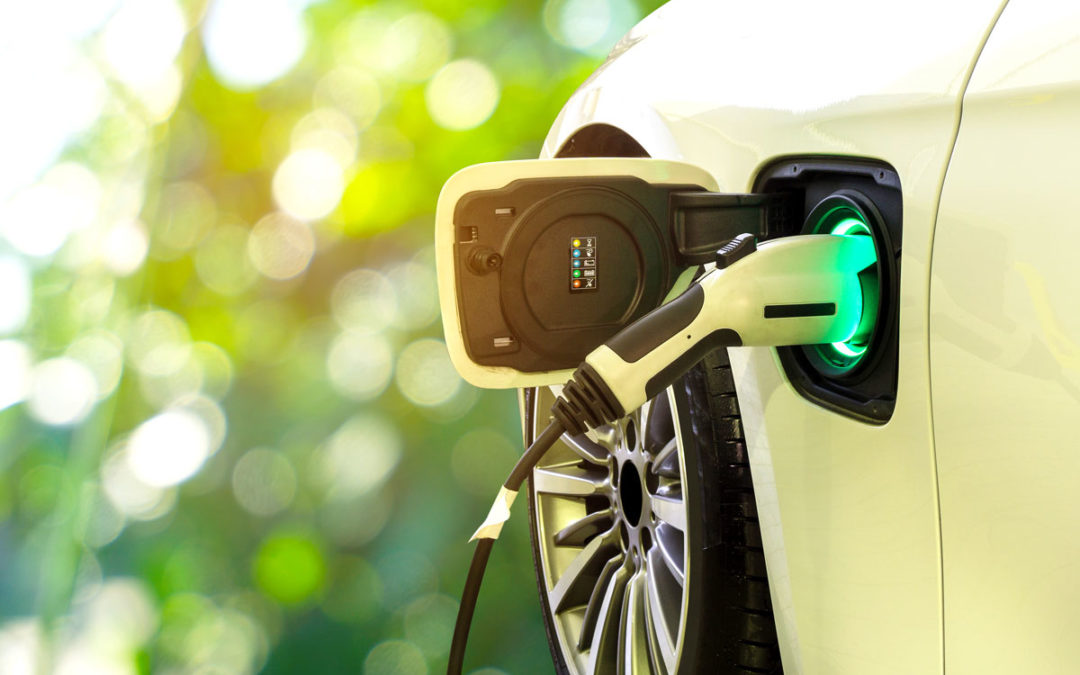
One of our Zappi charger in action. The green light means it’s charging on 100% clean energy!
To get the most out of your solar panels we recommend fitting the amazing MyEnergi Zappi charger because it can detect when you’re making more power than you need and automatically divert it to charge your car. And you can even choose exactly how much of your extra power is used, meaning you can run your car on a mix of grid power and solar for extra speed, or 100% sunshine for the ultimate green driving experience.
Sounds too good be true right? Well here’s a photo of one of our customers doing just that (the green light on the charger means the car is charging on 100% green energy), so we know the technology works because it’s in use by our customers every day. So in theory you can fuel your car from your very own 100% green nuclear reactor in the sky!
It seems Australia isn’t taking the transition to Electric Vehicles as seriously as we are in the UK, and their government is actually trying to slow the inevitable and even tax EV drivers. This (rather explicit) Juicemedia video explains all – but be warned, they don’t mince their words!
All the big energy providers are all raising prices for customers on out-of-contract gas and electricity deals, but what can you do?
The price cap, which limits the amount firms can charge for standard tariffs, is increasing. And although wholesale prices are rising by 33% this means energy firms can only up their rates by as much as 9.2%.
British Gas, EDF Energy, Eon, Npower, Scottish Power, SSE and Utilita are all set to increase the prices of their standard tariffs to the maximum allowed on 1 April 2021. Smaller suppliers Igloo and So Energy are also raising the prices of their standard tariffs, although they’ll still cost less than the price cap. British Gas Evolve is raising its prices in line with British Gas. Standard tariffs are also known as default tariffs or out-of-contract tariffs. You’re likely to be on one if you haven’t switched energy supplier or tariff in a while, or didn’t choose a new deal when your last fixed-term deal ended.
If you have a prepayment meter, the same companies are increasing their prices. But the savings you’ll miss out on by staying on an out-of-contract tariff are different. This is because the price cap and cheapest tariffs for prepayment meter customers are different.
What does this mean for you, and what can you do?
If you’re not on a fixed tariff we calculate your annual bill will increase by around £100 per year, and those on a standard tariff might pay as much as £200 extra. You can look at swapping providers but all of them will be increasing their prices, and those will only increase from here so the only way to reduce them significantly is to look at generating your own energy and cutting out the middle man as much as possible. By installing solar panels and a battery you can reduce your annual electricity bill by as much as 80%, and with the use of an immersion heater and electric hob you can cut your gas bill down too. If you own an EV you can potentially save hundreds of pounds per year on fuel by charging from solar, and as electricity prices continue to creep up you will save more and more as time goes on.
From financial incentives to greener commutes and improved fitness, there are plenty of pros to getting a bike that gives you a boost.
Fitness, the pandemic or the environment. Whatever the reason, many of us have re-evaluated how we’d like to travel in 2021 and beyond. One knock-on effect of this is that sales of electric bikes have really started to take off in the UK. Halfords reported a 230% increase in e-bike and e-scooter sales in 2020. E-bikes have a built-in battery-powered motor, which gives you assistance when you need it. It’s a handy backup for longer or tougher journeys, making getting around town or further afield possible without breaking a sweat. And it’s a good year to get involved. 2021 models offer a raft of new connectivity and smart features, plus there’s government support in the pipeline for cycling infrastructure and financial incentives for purchasing e-bikes. We’ve rounded up the key things you need to know if you’re considering jumping on the electric bike bandwagon this year.
1. Increased government support for cycling
In July 2020, the government announced a £2bn investment in cycling and walking, known as Operation Gear Change. Part of a long-term ‘green recovery’ plan, the money is pledged towards: Creating thousands of miles of new, protected bike lanes Creating a long-term cycling programme and budget, such as the one that already exists for roads Establishing a national e-bike support programme, which could include loans, subsidies or other financial incentives. This last point echoes the findings of the Future of Transport: User Study report. Conducted for the Department for Transport, it highlighted cost as being one of the main barriers to people buying an e-bike (typical prices start from around £1,500, although there are some cheaper options around at £500-plus). With a potential e-bike subsidy coming as early as spring 2021 (trials are currently taking place, but nothing has been confirmed yet), the price you’ll pay for an electric bike could potentially fall dramatically in the coming months. If it follows the pattern of subsidies on other electric transport options, it could be as much as a third off the price.
Don’t forget the Cycle to Work scheme. This existing scheme is worth knowing about if you don’t want to wait, as it could potentially save you 40% on the purchase price of an electric bike. First, check with your employer to find out if it offers the scheme. The way it works is your employer buys the e-bike for you to ride to work and you hire the bike through a salary sacrifice. By paying monthly for the e-bike with your pre-tax salary, you’ll reduce your taxable income – meaning you’ll pay less tax. At the end of the hire period you have the option to buy the e-bike from your employer for a nominal fee. This scheme is only for e-bikes where 50% of the journeys are for commuting, though. It might be worth holding out to see what the new grants might be if you want to own your e-bike outright, or use it mainly for recreational purposes.
2. Smarter electric bikes on the scene
One of the biggest changes coming to electric bikes this year is increased smart connectivity. This can be seen in models such as the Cowboy 3 e-bike, which uses your smartphone as a display, a key, and a means to alert friends and family of your location if you’re involed in a crash. Read about our first look experience with the Cowboy 3 to learn more. But we’ll see this connectivity coming to many more models thanks to third-party systems, such as that announced by Bosch. Called Nyon, this new display has a 3.5-inch touchscreen which connects to Bosch’s e-bike connect app. The display can provide navigation and fitness tracking. It can also ‘lock’ the motor as additional theft protection. Because they’re typically heavier than non-electric bikes, deactivating the motor makes the bike less attractive to thieves as it’s harder to run off with. eShift could make for a smoother ride Another incoming feature called is called eShift. Developed by several e-bike motor manufacturers, 2021 models with systems that support this feature will be able to automatically shift gears depending on how quickly you want to pedal and the effort you’re putting in. All this means that cycling with e-bikes in 2021 looks set to get smarter, simpler and easier. This doesn’t always go to plan, though, as Brompton’s recent e-bike safety recall shows.
3. Health and environmental benefits
E-bikes aren’t perfect; they can be heavy, and the lithium-ion batteries have a limited life and are tricky to recycle. But if you use them for journeys where you might have used the car or public transport, then they can help cut emissions and increase your activity. They can also make hilly or longer trips more feasible by bike and get you exercising while helping you out when needed. So, if you’re worried that you’re too old or unfit for cycling, an electric bike will give you the support you need. Finding the best e-bike The first step to choosing an e-bike is picking one with a good motor and battery system that will power you effectively for longer, and provide smooth assistance during your ride. Many bikes share the same third-party motor and battery combinations, so check our e-bike bike motor system reviews to help you narrow down your search to models with the best gear to power you along. If you’re after something more compact, check our independent folding e-bike bike reviews to see which models are easy to fold, light to carry and smooth to ride.